The book is essentially the entirety of this blog collected into one place, along with some additional information and resources. Maybe you’re like me and you like to have the book in your hand. Here you go.
If you’re interested, you can find it here:
Local bookseller: provide ISBN 979-8218534707, and they should be able to order through their distribution channels.
Here we are. October 8th, the one-year anniversary of Cooper’s death, is two weeks away. This has been a year in the dark wilderness, for sure.
In these last few weeks leading up to this significant mile maker in our lives, I have certainly felt it in my mind, body, and soul. Deep in my bones. The grief has come pouring back down, big wave sets, crashing over me. A new first, the anniversary of Cooper’s death, and more freezing.
I believe, the body does keep the score, the issues are in the tissues, and what fires together, wires together. I don’t even have to be conscious of it, my body just knows and it tells my mind, hey, things are not okay, I remember this date.
The cooling of the weather, the back-to-school routines, the leaves falling from the trees, the college kids back in town—yeah, this all spells trouble. Or so my body would have my mind believe.
All the biological, neurological things are happening. Through a trillion neurological connections, I am experiencing it.
After a year of navigating grief, the ground truth remains: I miss my son. I loved him so much. I still love him so much. I long for him to be here again.
Melancholy Man, big gaping hole right through center mass. Double-tapped.
I know Cooper will not be here in this life again, and this is so painful to accept. I will have to continue to navigate my life on this earth without him until it’s my time to put my angel wings on.
When I see my boy again, we are going to do a little tap dog dance on the pinheads. An angelic Irish celebration, or Australian Tap Dog hustle.
You’ve heard me say this before, and you have read it in my writing: I am 100% confident I will see my son again. This is truth. I have confidence I will be with all of my family del otro lado.
I can’t explain this to you; I just know it.
I have always shared with my children that there are three main questions we have to grapple with and come to terms with in this life. These questions, the Theological Three Sisters, are:
1. Where did we come from?
2. Why are we here?
3. Where are we going after death?
The answers to these questions, maybe even the grappling with them to figure them out, tell us a lot about a person. It’s defining. It shapes our life. Even not grappling with these questions says something.
While I have spent the last year navigating grief, striving to keep my nose above the waterline, I have also been spiritually grappling with the Theological Three Sisters’ existential questions.
Where did Cooper go? What is he doing now? And what will it be like when I see him again?
As I have wrestled with more existential questions, I have needed time and space. As such, I have been disinclined to attend traditional church and to be preached at/to. I don’t have the ears for it in this season of life.
Shall we draw theological swords and wax sanctification, justification, glorification, predestination, cosmology, eschatology, and dominion theology?
I’m out. Do your thing. I yield.
I have found a beautiful new spiritual home in a small, non-programmed Friends church. You know, the Quakers. The Meeting provides me with the spiritual space I need in this season of life to process, form, and continue my spiritual growth in a broadening-out cone. I think this small foundational piece of my life would be honoring to Cooper. Cooper loved silence and stillness. This is the essence of Quaker worship.
For me, I have accepted that silence is a new sacrament in my life.
Two roads diverged in a wood, and I—
I continue to be grateful for my wife, my daughter, my sons, my brother, my parents, my mother-in-law, my dogs, my Friends community, my family and friends, my health, and the fact that I am still smiling, standing, and breathing, even though I hurt badly.
Family, friends, as we come to pass this one year anniversary of Cooper’s death in two weeks, my intention is to step away from writing on this blog for a few months.
I finally went back and read through all of my blog posts, and I believe I have written what I have to say for the first year of bereavement.
For the last year, I have laid myself bare for the whole world to see, and I have been vulnerable in a very public space.
Why have I done this?
I have shared deeply from my heart because I don’t want any more young men and women to take their own lives. I don’t want anyone of any age to take their own life, but especially young men and women.
I don’t want moms and dads, brothers and sisters, family and friends, communities, to have to experience this. It’s terrible; it really is.
Further, if someone will experience the loss of a child or a sibling in the future, or has more recently experienced the loss of a child or sibling, I have been hopeful my words would be helpful. I wanted to let others know they are not alone, that we understand, and that you are going to make it—but the road is tough.
People do get beat up in the dark wilderness. This is for real.
I have also been hopeful that as a man who has spent a career in a high-risk operational environment (fire service), I would be able to provide some space for grown men to grieve openly, to see that it is okay to roll with lions and grieve. Both are okay.
I have been hopeful that in some small way, my writing has helped the human condition. I am showing up, and you are hearing my voice.
I have often shared with my children, “the Creation waits in eager expectation for the sons and daughters of God to reveal themselves.”
I am revealing myself. You see me.
There are two things I want you to know.
First, Cooper’s Memorial Stone is mounted at the cemetery. It is beautiful. The granite stone is from South Dakota and is called Blue Bahama. When I learned about this stone, I knew immediately this was the stone for his memorial. We are really happy with the simple yet unique shape of this stone. I think we did good. I understand the workers who installed the stone were impressed with our design.
Secondly, I/we are doing okay. We really are. We are going to make it. Our grief is stabilized, we are functioning reasonably well, and we are reasonably happy inside and out.
We’re broken, yes. But our love for Cooper will always be there, and it’s not going away. We will love and honor our boy moving forward in life the best we can. There will be ups and downs; we will hurt, we will continue to grieve, and we will continue to go on casting our shadows about. And yet, we will do our best to be grateful in this life, for our children, our pets, and for what we do have.
Third, there is a blog post coming soon from my wife, Victoria. I think it’s important you hear from her.
While this list is not exhaustive, this is what I have learned over the last year:
• If you lose a child or sibling or grandchild or good friend, your soul is going to ache like nothing you have ever experienced before. This is going to hurt so bad. I am sorry.
• Successful, loved people can and will take their own lives. I never thought this would happen to us; it was not even on my mind. And yet, here we are. There were over 50,000 suicides in 2023, and over 100,000 drug overdoses. Why? We should be talking about this.
• The loss of a loved one, like a grandpa, may be a trigger for those suffering with mental health issues, e.g., depression. A string of triggers may be harmful.
• We need to end the stigma surrounding mental health issues. There is no shame in having mental health situations arise, and if you need to go pro, go pro. Depression is a global pandemic, and the rates of depression in the US are the highest they have ever been. Fact.
• If you can see your loved one before they are buried or cremated, go see them. It made a big, positive difference for us.
• Anoint your child with oils.
• I hope you have a community that will surround you and help you during the toughest months of your life.
• The cards, the doorbell ringing, the flowers, the food, will quickly end. Supporters have a limited attention span.
• In the early days, especially, keep talking with close family and friends. You have to talk it out. Keep talking.
• People will grieve in different ways, and at different paces. There’s no right way to grieve, but we do have an obligation to grieve in a healthy manner. Society (family and friends) will want you to get over your grief quickly.
• This grief will be with you the rest of your life. You learn to cope with it; your strength grows in parallel with your grief.
• You will talk in circles, there will be way more questions than answers, and you will end up at the same dead-end in many conversations. Nonetheless, keep talking.
• Don’t be afraid to take a road trip when the dust settles a little bit. Get on the road and just breathe.
• Create an altar. Light candles (use battery-operated candles that look real; we have one lit 24×7).
• You will have trouble thinking and remembering for many months.
• You will deal with complex emotions you have never dealt with before. This emotional landscape, this traumascape, is tough.
• Stand together with family and friends. Put your feet underneath your shoulders and stand tall; get grounded.
• Anchor in, be prepared for spiritual edgework.
• Breathe. Ground. Pray.
• Rugged hope is more important than resilience. You are not going to bounce back.
• This loss will impact many people. The butterfly effect. Spiritual ripples.
• Lie to yourself and say, “The best days of my life are ahead of me.” Repeat it over and over again.
• You will grieve for the future—what you will have missed, what will never happen.
• This loss will affect every aspect of your life—your mind, body, spirit, social life, and work life.
• Writing may help. It helped me.
• Routine is important.
• Holidays are very, very difficult. The emotions will come up. This first anniversary of Cooper’s death, damn.
• You are never going to be healed, but healing will take place.
• It will be hard to breathe and stand in the early days. You won’t know what day it is.
• It will be hard to trust life again. If this can happen, then all bets are off; anything can happen. This is how it feels.
• People you least expect will come out of the woodwork to help you. And others you would expect the most from will fall flat.
• Grief comes in wave sets.
• You may freeze.
• Water, hiking, nature, and animals are healing.
• Music, art, poetry, and nature may speak the “words” you need to hear more than your religious tradition.
• You may experience a faith shift. You may lose your faith.
• You may talk to the dead. This is okay. You will pray more for and to the dead than you ever did.
• Animals, insects, and sounds (wind chimes, crows) take on new meaning.
• You may “see” spirits everywhere. You will be super close to thin spaces.
• Depression is not going to show up in a young man like society has depicted it. They may not lay in bed all day and mope. Cooper did not.
• Emotions get mixed up. Even happy, good emotions get mixed up with grief.
• Your system can get overstimulated much easier. Too many people, too much noise, too much movement. Stay away from these in the early days.
• You will not forget your child, your brother, your grandchild, your friend. This was my earliest fear. I now have confidence: I will never forget my son.
• You are never going to be the same. A demarcation line has been drawn. There was life before this loss, and now life after. You are a different person. Transformation.
• Don’t be afraid to experiment with new altars and sacraments in your life, whatever that may mean to you.
• You will now notice the small things—a ladybug on a flower is an entire universe. You will stop and consider them, both the flower and ladybug.
• You will be more compassionate toward others. You will move slower and listen more deeply.
• You will speak a special language now that only other bereaved parents and siblings will understand.
And on and on the list will go. These are the quick things that come to my mind.
Friends, I love you.
From the deep place where the coins are, thank you for picking them up with me over this last year. Look for a post from Victoria soon, and I will come back to blogging when it’s time.
During the summer of 2018, I spent four months working on our house in Southern Arizona, preparing to sell it. We were moving to Montana. It was a fine summer, one of my favorites. I worked with my hands, used a variety of tools, and connected in a deep way with the objective reality of rehabbing our house.
When I swung my hammer, I hit the nail solid, or I didn’t. The world was real, and it did not lie.
I was living my best life. While I was not technically a “professor,” this fact did not hinder my students from calling me one. I was working at the university in the mountains, teaching in the fire science program and running it. Because I was on an academic schedule, I had four months off. I was home on summer break, preparing our house to sell, before our final move up north.
As I prepped our house for the market, I tiled our master bathroom. I used a beautiful porcelain 36″ tile with ridges and contours. I set the tile on a diagonal, and it looked sharp. It lit the master bathroom up. It was a nice upgrade.
The water in Arizona is hard, loaded with minerals and quick to stain and leave deposits on glass shower doors. I tried, at first, to scrub the existing shower doors clean but quickly realized the best move was to buy new doors.
I was home alone. The new doors were purchased and in the garage. I took one of the old glass doors off, out of the rails, and was carefully walking it out of the bathroom. One of the corners hit the new tile floor, and the glass door instantly disintegrated in my hands. It literally turned to dust, shattering into a trillion pieces. I stood there in disbelief, holding my breath so as not to inhale the fine glass shards.
It took me the rest of the day to clean up the glass. I imagine there are still little pieces of glass in that bathroom somewhere.
This immediate shattering, a disintegration into a trillion pieces, is what happened to our lives 11 months ago, on October 8th, when we learned Cooper was gone, by his own volition.
Instant. Dust.
I have had hard times in life. No surprise, we all have. If you’re a Christian, you know you will bear a cross at some point in time. If you’re a Buddhist, you know life is suffering. If you’re an atheist, sometimes life is just a flat-out suck fest. The journey is sometimes rough, the valleys often unforgiving, and, god dammit Mama, you never told me there would be days like this.
But like a reed in the wind, when I have experienced pain and suffering in the past—the valley lows, those unforgiving life circumstances—I bent far over, but I never broke. Until now.
I think, retrospectively, lacking humility, breathing big and puffing up with hubris, I fancied myself as something special. I bent far over, touched the ground, cried, hurt, felt pain, but somehow regained my shape and became a reed reaching for the sun again, no longer bent over, touching the ground.
Fall down seven, rise eight.
Then, Cooper. Shattered. There is no regaining my previous shape. A threshold was reached, and I broke. I am broken. A trillion pieces of Dad, lying on the bathroom floor.
Not just my body, but the inside, too. My soul. My heart, my will, my spirit.
Let’s be honest, a good mosaic artist can’t put a trillion pieces back together again. Even if it were possible—damn, that’s an interesting human. That’s not a human.
So it’s transformation then, a reorganization into a new person—a new husband, dad, son, brother, friend, coworker.
This is why we say there is a cost to resilience. Scars. Shadows. Crossing thresholds, transformation, reorganization into something new.
As I reorganize, I find my confidence as a parent has been shaken. Again, in hubris, I once believed myself a pretty darned good father. I felt like we, as parents, fairly well had our shit together. We did all the things good parents do. Nice homes, good neighborhoods, quality education, solid friends, time together as a family, dinner together, sports, church, family vacations, music, art, an active interest in our children’s lives, love, care, tenderness, and toughness, too. Lions must roll. And so we did.
I took pride in the fact that we never used child care while our kids were growing up. We made choices. It was just us, mom and dad, raising our children together. As a firefighter, I would get off shift in the morning, go home, and put my kids in a baby backpack and go for a hike, or a baby stroller and go run. I cherished our afternoon naps together.
We were able to get all three of our sons through college debt-free, and we will do the same for our daughter, who is now in college. I used to admire this accomplishment.
As I consider my children today, and what I have to offer them, I am thankful they are older. I am skittish to offer them advice, to say too much, to lean in too far. I fear—did I lean in too much in Cooper’s life? Was I overbearing? Did my advice hurt more than help? Or, was I not there enough, too absent?
What role did I have in my son’s demise? It can’t be that it takes a village to raise a child, but when they take their own lives, they are on their own, 100% responsible.
About two years ago, I sat in a restaurant and watched young children running and screaming through the aisles while their parents sat back and said nothing. They thought it was cute. These “parents” acted like their children’s best friends, not parents. I remember thinking to myself, “what a shit show.” Now, I pause. I pause some more, and I think, what the fuck do I know? Actually, probably not much. You know what, screw it—run kids, run! Jump on the tables, bounce from booth to booth, show your best friends what you’re capable of.
As a parent, then, on the backside of losing a child, I find my confidence in fathering shaken. I wonder, would I come to me for parental advice? I don’t know.
We—my wife, our children, and I—have gone through a lot these past 11 months. We have experienced many firsts. Immediately, in October, we celebrated two birthdays without Cooper. Then Thanksgiving, Christmas, New Year’s, Mother’s Day, Father’s Day, Cooper’s Birthday, Fourth of July, and family vacations, all without Cooper.
Each of those days was hard. I am experiencing renewed sadness and grief as we approach October 8th, the one-year anniversary of Cooper’s death. As the seasons change, the cool mornings set in, the leaves change color and begin to fall, and school starts, there are several familiar signs that have me feeling it in the body.
It’s true, what they say—the body does keep the score. The issues are in the tissues.
Meaning, the mind/brain is connected through a thousand-billion neural pathways to the body, the gut, the heart, the belly, etc. Our mind is literally in the body. All of the reminders, the pain, and the grief that shattered me on October 8th—my body knows this date is coming up again, and it’s guarding up.
The good news is, I recognize it. I know my body keeps the score, and I know I have many issues in my tissues that are going to flex during this next month. I see you, body. I certainly feel you.
Metacognition. I see myself thinking about the issues in my tissues. Meta-emoting. I feel myself feeling the feelings.
The obstacle is the way, right? The only way out is through, right? When you think you’re done, you’re only 40% done, right?
Check in on myself. Breathe. Ground.
Chin up, shoulders back. Stand tall. Be strong and courageous. Never, never, never give up.
And so it goes, daily.
I’ve always been a little strange. My firefighter buddies used to bust my chops and tell me I would drive a convertible MG and ride around with a tweed coat and skull cap and be a professor. They were not far off.
But I do find myself even a bit stranger these days. I notice small things, especially animals and nature. I am very attuned to nature these days, and especially birds. I am captivated by birds. Or are they souls stopping by to say, “hi?” And which one of you is Cooper?
Before this tragedy unfolded in our lives, I was learning Finnish. It’s quite an interesting language. It’s a Uralic language, and not something we are used to hearing. Our ears are attuned to Romance languages, but not Uralic.
Learning a new language is challenging; we all know this. The best way to learn a new language is immersion. Here I am, right here, right now. I am learning the new language of grief.
Part of this new language is learning to speak with nature and birds and red foxes. Most bereaved parents and siblings already know this grief language. You learn it quickly. It’s like we’re all deaf, signing to each other, and having a conversation about spirits and birds and souls and issues in the tissues and all of the things, and nobody else knows what we are saying.
11 months. Damn.
I rarely watch television. Lately, I have been watching the documentary, 100 Foot Wave.1 I am watching it over and over and over again. I love it.
Why am I drawn to the ocean and waves in this season of my life, as I am reorganizing myself, transforming, on the other side of crossing a threshold? Why is the laid-back surfing life speaking to my soul so strongly? Why does Nazaré, Portugal present to me as so appealing while watching this documentary?
Perhaps, I wonder, if I could go back and do it all over again, and if our family were a laid-back surfing family, would it have made all the difference?
If Cooper were raised as a surfer, would I be writing this blog post right now?
Victoria and I started off doing it right. We did. Then we got caught in the hype, living the American dream. Working hard, earning the money, paying the bills, focusing on the kids, wanting to give them the best life.
And, perhaps, all they ever wanted to be were surfers, mosaic artists, and carpenters, swinging a hammer true.
Such is the new language of grief…
100 Foot Wave. Directed by Chris Smith, produced by Joe Lewis, Maria Zuckerman, Ryan Heller, and Michael Bloom, HBO, 2021. ↩︎
When I think of my grandson, I will always remember his character. His kind heart was genuine and compassionate; he was warm, gentle, and caring. He loved his family and his dogs. I hope his legacy will always be to spread kindness.
I still struggle with the word “suicide,” as my mind still can’t imagine that my grandson would take his own life.
We lived fairly close during Cooper’s childhood, so we were very fortunate to share many great family holidays together. Christmas, Thanksgiving, Easter, Independence Day, and birthday celebrations were all great fun.
Cooper enjoyed barbecuing with his grandfather, otherwise known as Poppy. It was always a joy to have Cooper in our home.
During Cooper’s childhood, he came for many sleepovers and also lived with us for a few months during the COVID-19 pandemic and again after his college graduation. As his “Nanny,” Cooper always put a smile in my heart and a twinkle in my eye; he was indeed very special.
I often ask myself, how could I, as a grandparent, outlive my grandson?
My own sadness doesn’t begin to touch what my son Kelly and his wife Victoria have been through this past year. As the mother of Cooper’s father and Victoria’s mother-in-law, I grieve that I can’t fix their pain as they suffer from this enormous tragedy. Their sadness is so deep I worry for their health, knowing that grief affects the mind, body, and spirit.
I often wonder how this happened to such a precious family who loved their son so much.
I’m close to my two adult sons, and I feel very proud of how they’ve grown even closer through this horrific loss. In the first few days after Cooper’s death, they shared heartache and horror that only a brother’s bond could survive.
Those were scary and horrific days in the immediate aftermath of Cooper’s death—too painful to try to share.
Cooper’s Uncle Jason arrived on the first day of the impact of our loss, and he held his brother tight during his darkest hours. For several months after our loss, Kelly and I would talk and cry daily on the phone, just leaning on each other’s pain.
Cooper was so loving and caring.
We believe Cooper suffered from a mental health crisis that had been lingering over the past few years, undiagnosed. Cooper had a few counseling sessions in recent years, but we never understood the depth of his pain.
Yes, this is what we mostly say to outsiders, but honestly, we just don’t have any other answers. We just don’t know. We are left wondering, how could we not know Cooper’s pain was so deep, and that he was able to hide it so well?
On the outside looking in, things looked amazing. Cooper had recently graduated from college with a degree in Aerospace Engineering, he had a good job at the university, a new car, and a solid bank account. But still, his world was crushing him with loneliness, depression, and a lack of self-worth that finally tormented him to end his own precious life.
Our family is devastated and broken.
My son and his family will always have that missing piece of their son and brother. We will forever mourn Cooper, the loss of his future, and the promise of the dreams that lay ahead of him.
Cooper was loved, and he loved his family. He was not heavily into alcohol or drugs; he took good care of his body. During his time living with us, I would be in awe of him swimming 100 laps, playing golf, taking hour-long runs through the neighborhood, working out in the village gym, and eating a healthy diet.
Cooper James: 23 years old.
How could there be such a short END date for such an extraordinary young man?
On the day of Cooper’s burial, October 20th, 2023, my son officiated the burial of his son.
There are no words to describe the heartfelt spiritual presence that took place on that day.
Only by the grace of God was Kelly able to stand before his family and give Cooper back to God.
I witnessed the Holy Spirit take Cooper’s soul into His heavenly kingdom during his burial. The sky was blue, white birds flew above, and a shiny perpetual light flowed through the tall trees. Go home, our son, it is your time to be with our Lord.
We were so blessed to have you in our lives for 23 short years, Cooper.
Years ago, I gave Cooper a prayer candle and a rosary. Cooper kept these on his dresser. In pictures, he often wore a patron saint necklace. Cooper was baptized and confirmed in the Roman Catholic Church.
I put the rosary from his dresser in his hands and buried it with him in his casket.
The Lord took Cooper home. I was there, this I do know.
I think I’ve learned that the grief of Cooper’s death is a pain we will sit with now and always, never having the answers as to why he took his own life.
Now we must learn to remember how beautiful our love for him was and is, and to hold tight to the memories we cherish.
Victoria was everything a mother could be. I remember her working tediously over the years, making photo scrapbooks for each of her children, my grandchildren. Now, Cooper’s scrapbooks are a family treasure; we value Victoria’s work that captures each year of his childhood through high school graduation.
We all have special memories of what a wonderful, precious life Cooper lived, and we know not to take this fragile, wondrous life for granted.
There is nothing left to fear after a family suffers a tragedy like this. Nothing. My love for my grandson lives on as I await our heavenly reunion.
I want to live out my life spreading ‘Cooper Kindness’ to all in honor of him.
When Cooper died, and in the months that followed, I found myself walking and moving in a very, very deep spiritual place. I felt as though I could literally reach out and touch the spiritual world if I wanted to. I mean this sincerely. Out of respect for what’s on the other side, the spiritual realm, I never did reach into the void.
I sensed a close connection with el otro lado (the other side). Animals and insects took on new meaning. Red foxes, butterflies, dragonflies, robins, cardinals, cranes, and crows all became more than just animals and bugs—they became messengers.
It’s funny, but not funny, how in my deepest pain, the spirit world leaned in on me through the natural world.
Riptides have a different meaning to me now, as do wind chimes, dreams, candles, and felt hugs.
I’ve had three dreams with Cooper in them since he died. My last dream was so real, I woke up crying. It was a good dream, and it lifted me all day. It still lifts me.
I was recently walking the path at a local park when a woman passed me in silence, but with a certain look. She seemed like a spiritual messenger. I wondered if she was an angel. That was my impression. With certain people now, I sit and ponder, I check them out, I wonder: is this a person or an angel?
I have come to realize that the traditional Christian faith I grew up with, and have believed in for most of my adult life, has not provided me with the language and imagery I need to cope with and explain the loss of my son.
If I’m being fair, and I think I should be, it’s the second time in my life that I’ve felt shaken and Jesus was not there. My faith has shifted.
If you’re a Christian, I understand that you feel compelled to advocate Jesus to me. I would do the same. Don’t be hurt if I share that I have some new territory to explore, which may be outside the bounds of traditional Christianity. I must be true to the muse within me.
I talk to Cooper, his spirit, and I pray for him (his soul) daily. I regularly pray for “the boys” (Cooper, Cas, Kameron, Austin, Cody, and Joshua). I see spirit guides in animals, especially red foxes. I sense Cooper’s presence in certain places he used to visit. I can be sitting in the reading room at my house, thinking of Cooper, and the wind chime on the porch will chime at just the right time. It’s uncanny.
Despite all the spiritual nuance, life is returning to a baseline. My wife and I are both working, cleaning the house, grocery shopping, working out, reading books, watching television, caring for our children and pets, caring for each other, and doing all the things adults do.
Returning to work part-time has been helpful for my healing process. It has also moved me further away from the deep spiritual place I was in. Perhaps, and I think so, this is a good thing. Being so close to a thin space is good, but these places are not without their inherent dangers.
People often ask, “How are you doing?” My answer is, “I’m okay. I’m not great, and I’m not terrible. I’m okay.” And I think, at 10 months in, this is completely acceptable.
I don’t cry nearly as often as I used to, but I still do. Just this morning, a good family friend shared a Facebook memory of Cooper’s freshman drop-off day at the University of Arizona. Cooper was sitting next to her daughter, and Mama Bear was with Cooper. The picture took my breath away, and the tears welled up.
I was explaining to a friend that I now understand micro-aggressions. To be clear, nobody is being aggressive with me and nobody is intentionally trying to harm me. As I go through each day, I almost always bump up against a conversation related to children. I’m frequently asked how many children I have, or people talk about how difficult their child is being, and I only wish mine were here, etc.
These small wounds add up over the week, and come Friday, it’s time to shed some tears. I always feel better after I shed a few. It lets all the funky chemicals out.
Truth be told, I drink more alcohol now than I did before. I don’t drink a lot, and I don’t have a problem, but I do drink more than I used to. On Fridays, I drink beer and get my buzz on. I’m not sure I do this to numb the pain because I don’t feel pain in that way. It’s more that I just smile and get happy and can set the grief thoughts behind me for an evening.
I’ve become good friends with silence and quiet. It’s how I best process and grieve. Since I work part-time, my wife works, and our daughter is in school (the boys live outside the home—they are adults), a few days a week it’s just me and the puppies. I cherish this time to think slowly, consider, reflect, remember, pray, listen, and try in some way to process this tragic life event. I pay homage to Cooper.
Occasionally, I lean into pity parties. Why me, I wonder? Why am I drinking from this cup? Why didn’t it pass over me? My heart and mind move to the mothers in Gaza, and I am quickly humbled, and I forget my pity party.
If you save one life, it’s as if you have saved the whole world. Likewise, if you take one life, it’s as if you have killed the whole world. No?
We just passed the 10-month mark since we lost Cooper to suicide. I still struggle with wondering why such a beautiful boy, who was seemingly doing so well, self-ejected from life so suddenly and without warning. We don’t know why. We know there’s no do-over for this one. We don’t get a re-do, no take-backs. What’s done is done, and oh, so final.
I’ve perfected my “elevator speech.” I say, by rote memory, “We don’t exactly know what happened, but it’s likely Cooper had undiagnosed clinical depression, which he wasn’t receiving treatment for.” This seems accurate, but I really don’t know. It’s a stupid-wild-ass-guess (SWAG).
Does it seem sad that I have to have an elevator speech for relating the loss of my child? It is sad to me. Without the 30-second elevator speech, I would freeze.
I continue to have many questions, but there will be no answers (in this life). I understand this terrible logic.
I have an overwhelming, strong sense that I will see Cooper again on the other side. I know it in my bones, unequivocally. Zero doubt. Why do I sense this and know it so strongly? I don’t know.
I haven’t gone back and read any of the blog posts I’ve written. I write them, read them a few times that day, post them, and I don’t look back. I’m not sure I can even go back and read my own writing about what happened. How’s that for pain and loss? I remember Cooper, for sure, but I press forward.
I worry about my wife. She’s an only child, and she was very close with her father. We lost Poppy Jack to Parkinson’s disease in May 2023, and then Cooper, Mama’s baby boy, in October 2023. Either one of these is a tough cross to bear on its own, let alone together, in tandem.
I wait in eager expectation for creation to reveal itself and answer some questions. I’m flipping the script. I now more fully understand all the ancient myths where the protagonist is angry with the gods.
A good friend, like a mom to me, frequently checks in with us. She wants us to tell her stories about Cooper on holidays, like the 4th of July. Recently, on August 8th (Cooper died on an 8th), she asked us to share a brief memory. I shared this:
I was looking for a .jpeg picture the other day. I’ve saved all of Cooper’s pictures in my iPhotos, and I have his little meme pictures from saving his data from Snapchat. It was kind of funny looking at the memes Cooper was sending to his friends in high school. He had a pretty good sense of humor. Many of the memes are totally inappropriate, and most people would not find humor in some of them, but they made me smile. The kind of things these kids sent back and forth to each other was comical. Digital natives. As Cooper got older, he was trying to wean himself off social media, and I think he was largely successful. Good on him.
At our most recent The Compassionate Friends meeting, a bereaved mom said to our group that she feels like, since her son’s death, she is just drifting. I completely understand; I feel like this now. I used to believe I was an “operator,” that I could influence my environment and make things happen. Now, I am in a boat drifting along parallel to the shore, waving at all the good people. Just drifting, no paddles. Waving, with a smile on my face.
I’m no longer forcing life, asserting my will. I am taking paths of less resistance, moving with the spirits. There is a flow to life; I sense it now.
Oddly, this lack of strain, this letting go, is not so bad. I am finding a new happiness in release—probably because I am now realizing how little control I actually had over anything.
Through Cooper’s death, I have let go of my driven self. I am more attuned to the compassionate person within me that I have always been but have not let out because of life and risk. It’s risky to be authentically ourselves and show that to other people. But now, to heck with it.
My kids are doing well, all things considered. I am anchored at the reef, wrecked, and doing my part to full-send them into the world. Mama Bear and I have each other. We are doing spiritual edgework together. I’ve got the grief. I will hold it for all of us. Kids, you go.
A question I used to ask my children was this: “How are you… deep in your soul?” The reason for the question was because if I asked them, “How are you doing?” like we all do all the time, they would respond with “fine” or “good.” So I changed the question. “How are you doing in your soul?” This caused them to pause and reflect.
How am I doing in my soul? I hurt. More on some days than others. I understand my life has been tragically altered. Even when I try to fake it and use old maxims and axioms to pump myself up, I know I have been badly wounded. My wife, tenfold.
And yet, I am still standing. I still smile, and I still have joy and happiness in my heart. I still want the best out of this life.
It’s difficult for me to have conversations with people who act like they know what’s up because they’ve gone through some stuff and all, but they have not lost a child. There’s just nobody who knows except the people who know. I just can’t explain this. So my peace and my love go out to those who have lost a child, who know this deep hurt place. Only they really know. When it comes to understanding the new spirit world that opens up after the loss of a child and the difficulty in straining through traditional Christian language to find words and symbols that help the grieving soul, only bereaved parents know.
I am tending, in this regard, toward more silence in my life, less noise, and fewer distractions.
As I close out my free write today, I’ll share a story about Cooper that makes me smile.
From a young age, Cooper was clearly on a path toward diabetes. I jest, but the boy loved sugar, and in particular, powdered sugar. He would toast bread and use a spoon to scoop and then smooth a 1/4-inch layer of powdered sugar on each of two slices of bread, edge to edge, times two. He would then sit at the kitchen table, watching SpongeBob on the television across the room, smiling with contentment at the pure joy of sugar and SpongeBob.
One day, I took out the powdered sugar bag to make Cooper some powdered sugar toast. I felt a spoon in the bag, so I went to take it out. I noticed another spoon in the bag. Then another, and another, and another. I took five spoons out of the powdered sugar bag. Apparently, once Cooper made his toast, he simply left the spoon in the bag and moved on with his day.
These were the kinds of funny nuances of living with a gifted child. Bright, but lacking in the common sense department.
These little stories of Cooper still make me smile.
Beginning in October 2023, I slowly started adding songs to my “Thinking of you, Cooper” playlist on Spotify. I like to go on long walks (my Trail of Tears) and listen to this playlist, and usually, the tears flow.
I have developed a new relationship with music these days, a deeper appreciation for how it touches my heart.
When Cooper graduated from high school, he wanted to go to Puerto Peñasco (Rocky Point), Mexico, with 18 friends. I was okay with this, provided there would be at least some parental supervision. So, I went with another father, Jason. We stayed in a different hotel, away from the kids. We weren’t there so much as supervisors but more as support in case the kids needed help.
As it turned out, Jason and I had a great time. In the mornings, we would kick our feet up on the balcony, drink coffee, and watch several walks of shame pass by below us. “Oh, hi,” we would wave and smile. It was quite comical.
There was only one time when we had to “pump the brakes” and play our dad cards. We were at Wrecked at the Reef Cantina, hanging out. Jason and I were with a group of parents from Southern Arizona, eating, drinking, and chatting, when Cooper came up to me to ask a question. He had a JUUL (vape) in his hand and took a long drag, blowing smoke in my face.
He was buzzed and genuinely wasn’t being a smartass; he had just lost complete situational awareness. I asked him, “Have you lost your freaking mind?” He looked at me, stunned. “What?” I said, “Dude, you’re vaping in front of me!” Cooper was like, “Oh, shit!” A shit-eating grin crossed his face. For those who knew Cooper, you know the smile I’m talking about.
It’s funny now, reflecting on this story, and we still laugh about it as a family. Anyway, the kids were pretty liquored up, and they wanted to go into the city. It was already 1 a.m. Jason and I were like, nope. Hell to the nope. Everything you need is right here. Slow your roll, go have fun.
Wrecked, seems appropriate to me these days. The word has the right texture for my life.
Wrecked at the Reef, Rocky Point, Mexico
Last week, I had the good fortune to attend the National Fire Academy for a week-long course in youth firesetting intervention and prevention. It was a great class, and I met a lot of good people.
After the first day of class, our group of 18 (hey, serendipity, interesting number) went to the Command Post Pub to meet and greet and figure out what fun things we wanted to do during the week. I ended up talking to two women, and at some point, I shared that I had lost my son, Cooper. It was Sunday, Father’s Day, and I was genuinely having a bit of a tough day. It felt good to share.
One of the women had not lost a child, but she had lost a brother. She shared that she could see her parents struggling but didn’t really know what to do or say. She asked me, what should I say? What do I do?
My answer to her was this: honor your brother by living a great life. Let your parents know that you are going to be okay, that you’re happy, and that you are going to suck the marrow out of this life and live it for all it’s worth. What your parents want more than anything is for you to be healthy, happy, safe, and successful in your own right.
As a parent, I have been wrecked. My wife, too. All of my friends in my The Compassionate Friends group, wrecked. Bereaved parents—wrecked. I’m not suggesting we don’t have joy and happiness; we do. But understand, a piece of our soul has been taken, and we don’t get it back. We’re not whole. Thump my chest, and you will feel the missing piece.
I so did not see this coming in my life.
I may be wrong, but I don’t see this wreckage for my children. I know they hurt, and they should, but a piece of their soul has not been taken.
I remember standing with one of my sons over Cooper’s body at the funeral home. We were both sobbing tears from a place deep beyond where the coins are. If God is the breath within the breath, then these were the tears within the tears. Our tears were crying.
I put my hand on Carse’s shoulder and told him, in truth, “This is the hardest thing you will ever do. Right here, right now.”
Imagine my kids, 28, 25, and 18, experiencing this—the valley of the shadow of death. Life laid our Party of Six low—knees to the ground, forehead to the ground, low.
Now they know. My kids know. Now they will bring compassion to others. They are seers and sensers.
What I want to say is: what will bring me the greatest joy in the years remaining in my life is to watch my children do well and live good lives. I don’t want them marinating in Cooper’s death for too long. I want them to grieve in a healthy manner, at their own pace, yes, but I do want them to find healing and peace and be able to move on. I am confident they will always find ways to honor their brother.
I will stay with the wrecked boat on the reef, but you kids need to go, live, and do well. Crush this motherf**ker called life.
Below is a text message I sent to my oldest sons back in January:
Hey, boys. I have been going through some of Cooper’s things this morning, trying to close a few things out. I went back and read his journal, looking at a few things. In light of that, I wanted to share a few things with both of you. The first thing that stands out to me is that Cooper was doing really well in life, but he didn’t see that in himself. He was really hard on himself, held himself to unrealistic expectations. Back when I used to fight fire, there’s a saying about standing in the center of the fire. You have to be able to stand in the heat, smoke, and flames and know that even though it doesn’t seem like it, you are winning the fire fight. Both of you are doing exceptionally well in life, and I want you to see it, to know it, and to embrace it. You are. You’re doing great. Know that. Just keep standing in the center of the fire and have confidence—you are going to win the fire fight. Also, don’t be hard on yourselves. Love yourself. Offer yourself kindness, good thoughts, and nice words toward yourself. Don’t hold yourself up to unrealistic expectations. Smile. Don’t take yourself too seriously. Cooper was too hard on himself and didn’t realize how well he was doing. He became unsettled standing in the center of the fire and lost his nerve. Keep your feet on the ground, stay grounded, and keep doing what you’re doing. It’s working. Love you both, Dad.
Losing a child wrecks you. It should. On all levels, wrecked—physical, emotional, social, spiritual, mental.
But healing does take place. I believe this. It is happening.
I imagine my life as something like Moses. I’m not going to enter the Promised Land. How could I enter the Promised Land without Cooper?
What I hope, though, is to be able to stand on Mount Nebo and watch my sons and daughter living good lives in their Promised Lands. I see smiles on their faces, love in their hearts, and kids scattered everywhere. They know. They are seers and sensers and lovers. They know, but they are living. They live and engage this world with compassionate hearts.
In my heart of hearts, I know and believe I will see my son again. Zero doubt about this. I live today to see my kids do well and to help others. In 2013, I was in Israel and spent time with Zaka Search and Rescue. A rescuer said to me, “If you save one life, it’s as if you have saved the whole world.” I believe this.
I’m slowly walking toward Mount Nebo, this last third (quarter) of my life. I aim to save one life, maybe many, and then stand on the mountaintop and gaze out at my kids and smile. Then I am going to go see my boy. I can’t wait to hug him again.
When a person encounters a stressful or tough situation, I think there are three responses available: fight, flee, or freeze.
As a Generation X’er, I grew up with my fair share of fighting. The bigger the party, the bigger the fights. Some of my readers will remember those fights well. We were not malicious; we just ran hard, and fighting seemed normal when I was in high school.
Of course, I then spent a career in the fire service “fighting” fires.
Fighting—a fight response—is not new to me. I have neural pathways for this response.
Many years ago, while living in Southern Arizona, my wife and I were walking with our golden retriever, Winky, to the bus stop to pick up one of the kids. It was a sunny, marginally cloudy day, and there had been a little bit of lightning, but nothing significant. As we were getting close to the bus stop, a bolt of lightning flashed down and struck a street pole about 50 yards away from us. Without even thinking, the dog and I ran 100 yards down the road, leaving my wife standing there alone. She froze, and I fled with the dog.
We laughed about it later. It’s still funny to me. My wife learned she should never count on me to save her in a thunderstorm with lightning bolting down. She’s clearly on her own.
The point is, I fled. My system kicked in, and I ran, with my dog, 100 yards down the road without thinking.
There are many instances in my past where I’ve fled. Again, not a new response for me. Thinking back on my professional life, particularly in administrative settings, I can recall “fleeing” uncomfortable situations.
What’s new for me today, in my grief after the loss of Cooper, is freezing.
Cooper’s birthday was in early June, and I froze as the day came and went. I think I froze on Thanksgiving and Christmas, too.
When these significant dates come—the “firsts”—I have difficulty figuring out how to respond, what to do, and how to best honor my son, who is no longer here.
There’s nothing to fight, nothing to flee, so I just clam up and don’t do anything monumental. I freeze.
I have read in the grief literature that the best way to tackle firsts, like the first Thanksgiving, Christmas, New Year’s, birthdays, etc., without your child is to plan ahead for what you’re going to do. They say you need to get ahead of the curve.
This sounds nice in theory, but for me, I freeze and then let a grief wave wash over me for a day. I do get emotional on these days. These emotions are not as complex or as strong as they once were, but they’re still challenging to work through, even if only for a day.
For Cooper’s birthday, we got burritos and Mexican beer. I turned my hat backward, the way Cooper always wore his. I turned my hat around, ate a burrito, and drank a Dos Equis lager. I toasted Cooper.
As I said, frozen. That’s as far as I could get.
There’s a question I am asked a lot, and it’s a question I would have been in the habit of asking others before, and the question is, “How many children do you have?”
This question initially causes me to freeze. I am getting better at answering it, but it takes me a minute to calibrate, to breathe. This question has made me realize how direct it is, and perhaps unsettling. It’s a question I no longer ask others. I would love to hear about someone’s children, but I will let them tell me about their children without me asking how many they have.
When asked, I always answer, “I have four children.” Because I do. It just so happens that one of them is dancing on pinheads with the angels these days.
Months ago, I couldn’t think, remember, or organize very well. Today, I am better. Maybe not 100%, but I am cognitively functioning much better. Approaching normal, on most days.
Months ago, the complexity of emotions within me and washing over me was so tough and challenging to deal with. Today, my emotions and feelings have calmed, and I have much more emotional balance in day-to-day life.
Physically, I’m okay, but I’m probably drinking more than I normally would. I’m okay with this, for now. I’m not drinking nearly as much coffee as I was eight months ago.
Spiritually, something is awakening. I am wrestling with questions, and I no longer want to throat punch God. I am in the arena; I am praying and I am meditating.
And yet, I still freeze on those special days, the “firsts,” when I simply don’t know what else to do, when the reality—the full weight—of losing my son lands on me, for a day.
Fighting is easy. Fleeing is easy.
Freezing, caught between fighting and fleeing in the nervous system, is new space for me, and it’s difficult.
As Father’s Day approaches, I have a plan—freeze. Just numb up and let the wave crash down…
Friends, I found a letter Cooper wrote when he was 13 years old. It provides some insight into our beautiful boy. It highlights his love for animals, and particularly hedgehogs. I’m not really sure why, but Cooper loved hedgehogs.
Hedgehogs are Cooper’s spirit animal.
This short letter captures Cooper’s inquisitiveness. He was certainly a smart boy, he had lots of questions.
How many 13 year olds were calling out the internet for accuracy, back in 2013!?
Anyway, many of you have mentioned you like reading things about Cooper. I was looking for something else in my files today and came across this. It made me smile.
Enjoy!
Ps- the doctor’s name is not John Doe. Also, Cooper had proper salutation for his letter, I shortened it up for simplicity. I have not made any corrections otherwise, the letter is as written.
Cooper James
August 2nd, 2013
Dear Dr. John Doe,
Hi, my name is Cooper James and I have a few questions for you regarding hedgehogs. I’m thirteen years old and ever since I visited a hedgehog at the local zoo I have found that I would love to have one as a pet. After researching a little bit about them, I discovered that they were officially “legal” in Arizona however you have to have a permit that is very difficult to obtain. I haven’t found out the actual requirements for this permit but I have read online it is “virtually impossible to obtain” (Hedgehog Central).
So one question I have is what are the actual requirements, and why, if Hedgehog Central was correct, are these permits so hard to obtain? I’ve also found online that hedgehogs were illegal here because they have highly contagious foot and mouth disease. Now this is something I understand but from my research these diseases are typically only found on hedgehogs sold from pet stores. I believe that if hedgehogs were illegal to sell in pet stores, and only from highly credited and certified breeders then these diseases would not cause a problem.
Please note that all of my facts are based off research from the Internet so I might not be correct in everything I say. That’s why I’m sending this letter to get more information on the topic. You can contact back through the return address or my email …@gmail.com. Thank you for time and have a nice day!
Special thanks to The Compassionate Friends for allowing me to share my heart with men. Special thanks to Cathy Seehuetter for editing.
How Ought a Man to Grieve the Loss of His Child?
Firefighting is inherently dangerous and it remains, primarily, a man’s work. Yes, women are increasingly joining the US fire service, but to this day the profession of firefighting is represented by an overwhelmingly male demographic.
I am a man and I have spent my adult life in the fire service. I lived and moved and found my being with men. Grown men. Aggressive men who channeled their behavior in a positive manner toward protecting life and property in local communities. Compassionate men, who rarely worked alone.
There is biological predisposition and learned behavior firefighters have that expresses itself in what I describe as “John Wayne-ing” it. This looks like fierce determination, grit, problem-solving, and not asking for help. These are behaviors many men learn, certainly, and if we are being fair, are also naturally predisposed to.
What then when we, men, experience the loss of our child?
On October 8th, 2023, we lost our 23-year old son, Cooper, to suicide. I don’t like writing this word, suicide. It pains me deeply, yet it remains ground truth. I cannot undo it.
A micro-atomic bomb was dropped on our house, on our lives. I dropped to my knees and the air was sucked out of me. I could not stand, and I could not breathe. Yes, I cried. I wailed. I still cry.
I remember many of the fires I fought. I was never alone; I was with a crew of firefighters. We always practiced the buddy system. We worked in pairs of at least two. If we went into a fire together, we came out together. It was that simple. As the firefighters say in Backdraft the movie, “if you go, we go.” Meaning, your brother or sister firefighter is not going to leave you in the fire if something happens to you.
In a fire, in a fire station, in the fire department, firefighters practice a lot of togetherness. Tough times, responding to tough calls, requires “tight togetherness.” In a small fire, for example, firefighters can work off the hose line away from each other but within verbal communication range. In a complex, difficult fire, firefighters have a hand on each other’s back and do not leave each other. The proximity is dialed to the level of physical touch.
Immediately after my son died, my brother flew into town to be with me. He slept on the floor next to the couch where I slept for four nights. We got up at night a few times, cried and hugged each other. He chose to enter the fire with me, and we practiced a lot of tight togetherness. He had a hand on my shoulder. The immediacy of Cooper’s death required this level of proximity.
I know of a man who has lost a son. He is grieving deeply. He lives near a lake, and he has chosen to focus on his dogs, fishing, and solitude. He’s “John Wayne-ing” it.
I respect this. I respect this man. I honor him. Who am I to suggest how a man ought to grieve? If we are truth telling, I could very, very easily be this man. I could check out, thumb my nose at all the things, and live in solitude. I do not think I would be wrong. Perhaps I should do this.
Despite this impression, my history and behavioral conditioning in the fire service runs deep within me, and I want to be with my brother. I don’t want to be alone in my grief. I do not want to walk alone. I know that this is a complex, difficult fire and I need to be working with a crew.
I talk to my wife, my mom, my children, my brother, and my Compassionate Friends frequently. I want to talk about my son, what happened, and how I am feeling. I write. I walk. I breathe. I ground. I lean into tight togetherness and work as a team to help me make sense of this gaping, painful hole in my chest.
To be fair, I think a man needs time alone, processing time, time in the woods with his dogs fishing the lake. We lived in Montana for several years and this resonates with me. As I like to say it, we may need to hole up in a Nepalese cave and drink yak’s milk with the shamans to begin to make sense of this tragedy.
A man needs this for a season. Maybe a few seasons. There is no shame in this.
Still, I want to call men to tight togetherness following the loss of their child. When the fire is complex, hot, dynamic, and dangerous, I know it is the time and place to practice tight togetherness. Hands on shoulders.
Knowing men the way I know them, especially working in high-risk operational environments for most of my life, it could be that only other men ‘who know’ are able to talk with a grieving man who has lost a child. This may be the signal that gets through the noise.
I remember a counselor coming to the fire station after a tragic call our crew had responded to. The counselor had never worked with firefighters and did not know a thing about fire service culture. We ran the counselor off, as they had no credibility.
If a man has not lost a child and offers to help me, despite his best intentions, it would land flat. I would run him off. To talk to me about the loss of a child, you need to show up with credibility. You need to have lost a child.
The mantra of The Compassionate Friends is, “We need not walk alone.” In the fire service, this is a lived reality. Firefighters don’t work alone. As the saying goes, “If you go, we go.”
Men, how ought we to grieve the loss of our child? With rugged determination and grit, certainly, but also, not alone. My humble admonition is this: do not do it alone. Go in together, come out together. Lace your solitude with compassionate family and friends ‘who know’ and will put a hand on your shoulder and not leave you during the darkest night of your soul.
Especially in the loss of a child, practice tight togetherness. You need not walk alone.
Today is our daughter’s graduation from high school. We are so proud of her and the hard work she has put in over these last four years. Grace, a.k.a., Little Miss Sunshine (LMS), has had an amazing journey, she has a beautiful story to tell, and you would all be very proud of her. Here’s to her new beginnings!
It’s also bittersweet because we know how much Cooper loved his sister and how happy he would be for her today. I pray he is somewhere up there, smiling down on us.
Sunshine’s brothers, her future sister-in-law, and Nanny and Poppy from Arizona are all in town. We’re all here, and we’ve been celebrating. Trying to celebrate. Doing the best we can to celebrate.
In 2017, I was in Bozeman, MT, having dinner with my cousin “KK” at a local eatery. During dinner, KK explained to me that one of her favorite things in life is celebrating. She loves to celebrate all of life’s occasions. I thought this was cool, but to be honest, I had never thought much about celebrations, and as a general rule, I don’t tend to celebrate very well.
Yay, you scored a touchdown, awesome, that’s your job, now get off the field. What does Jocko say? “Nobody cares, work harder.”
This idea of celebrating, as shared by my cousin, is on my mind more frequently these days. It’s very easy to be consumed by grief and thoughts of Cooper—all the time. After the loss of our son, celebrating birthdays now seems like a bigger deal to me. Our oldest son just celebrated his 29th birthday, and it’s a big deal, worthy of celebration.
I am finding, though, that celebrating is not so easy. I am having to be very intentional to embrace Sunshine’s accomplishments and focus on her, this special moment, her success, and her commencement this evening. I am surprised by how hard it is to stay focused on the good happening right now, here, today.
I am trying to say: our daughter’s graduation is highlighting how difficult it is to celebrate these days, even though I want to and I have a greater appreciation for it.
The last time our boys, daughter-in-law, and Nanny and Poppy were in town was in the immediate aftermath of Cooper’s death. What we are discovering during this visit for Grace’s graduation is that the body does indeed keep the score.1 There are triggers.
Even though we are “celebrating,” it’s hard not to notice the gaping hole of Cooper not being here. We all feel it and sense it. Our bodies are saying to us, “Hey, the last time you all were together, things were not good.”
During these few days together, with family in town, I am also realizing how important my daily routines have been to my healing process. I’m not in routine right now, and I feel it. My shadow is long these last few days.
Truth be told, I have felt good over the last few months. Smaller shadow, less casting. I have become aware that things are going to be okay. Not great, but okay. I have genuinely sensed some level of healing taking place in my life.
I went back to work part-time in March, working within community risk reduction. Four weeks ago, I was at a public school delivering risk reduction curriculum to second graders. In one scenario, I was working with a small group of students, teaching them how to call 9-1-1 on a real phone with a 9-1-1 training application installed on it. It’s a pretty cool, high-fidelity learning device for second graders.
This one little girl said her name into the phone, and the phone misheard her and began to call her “Pandoras.” This little girl let out the most authentic laughter I have ever heard, and she could not stop laughing. Her laughter was infectious. Before I knew it, I too was laughing. Authentically, from the deep place, bubbling up to my face, I was laughing. My spine was shaking. Real laughter.
We finished with the group, and I was standing, waiting for the next group, outside, in the sun, on a beautiful day, watching a Cooper’s Hawk. I remember thinking to myself, I am healing. I said to myself, that laughter just now was genuine. It registered with me that it was the first time I had authentically laughed, from my soul, since Cooper had died. I think it was a good sign.
Back to all my family in town. With the triggers firing from the last time we were all together—genuine trauma—and with my routine out of balance these last few days, it’s given me pause to realize how raw I still am. I’m not healing as much as I thought I was.
Remember, I don’t expect to be fully healed from the loss of Cooper, but I do expect that healing will take place. In resilience studies, there is recovery, adaptation, and transformation. In general, I think society, maybe family and friends, expect bereaved parents to recover at some point in time. You know, to “bounce back.” To get back to who we were, and rather quickly. What really happens is transformation. We will not be the same people we were, and whoever the new person we will become through transformation will take a long time. Years. At least five, likely twenty or more.
I will outlive my life before I become the new me.
In the days after Cooper’s death, I ran into my neighbor while I was walking the dogs. She works in mental health. She gave me sage advice that has stayed with me. I remember our conversation vividly. It was early, around 7 a.m., and we were talking across the street, as we both had our dogs and mine was being a barking nuisance. She said, everyone is going to grieve at different paces and in different ways, and you just have to accept it.
I see it with my family, with my children, how they all are grieving differently and in their own unique way. I have come to call this a “grief fingerprint.” I think we all have our own grief fingerprint, and we are going to grieve in our own way, at our own pace, and nobody’s grief fingerprint will look like another’s.
I read three books immediately after Cooper died, I read everything I could get my hands on in Cooper’s iPhone, and I joined The Compassionate Friends. I did not do formal counseling. My wife, meanwhile, hasn’t finished a single book, hasn’t read any of Cooper’s text messages, and she cuddles his hoodie at night. Different fingerprints.
I can see how different grief fingerprints could create challenges in relationships, including marriages. If a couple starts to diverge too significantly in how they are processing grief, and their timelines are very different, it’s bound to create some stress in the relationship. This is why I think it’s important to know this is likely to happen and to simply “embrace the suck.”
I am grateful our loss has tended to bond our marriage closer. We are very kind to each other, and we give each other wide berth to process and deal in our own unique way. We are, for better or worse, trauma-bonded.
The other thing I am aware of these past few days is that I find it difficult to compartmentalize my emotions. Happy bleeds over into grief. I am happy and joyful for my daughter. I want to lean in hard and celebrate her special day, and yet my joyful emotions get confused in me with grief and sadness, the big gaping hole in my chest, the emptiness, the negative space of hurt, good ol’ Melancholy Man.
Does this resonate with others who are grieving?
My emotions don’t have distinct names and places inside me, as they used to. Now they’re just emotions. Said another way, all of my emotions, even the good ones, somehow have a tendency to anchor back to grief and the loss of Cooper.
I think with intentionality, I can work on this, but it is an observation.
As a kid growing up, I remember learning about the Kubler-Ross five stages of grief model. I suppose, initially, I had the idea that grieving the loss of Cooper would be something like this model—five stages. I thought, I guess, that I would move from one stage of grief to the next, sort of self-actualizing up the pyramid, like Maslow’s Hierarchy.
I would take anger and bargaining with God to be good signs that I was coming around, working my way through the five stages of grief.
I am not suggesting the Kubler-Ross five stages of grief model is applicable to the loss of a child. What I am saying is that, up to now, I would have assumed it was. And I think most of society, rightly or wrongly, would apply this grief model to a bereaved parent.
Seven months after Cooper’s death, it’s now very clear to me the Kubler-Ross five stages of grief model is not a good framework for mapping the grief journey following the loss of a child, or a brother, or a grandson.2 In my experience, it’s not applicable. Maybe don’t throw the baby out with the bathwater, but I am not inclined to use this model as a touchstone for navigating the grief of losing a child.
While I was with my Compassionate Friends group earlier this month, we were talking about the impulses that come over us in the early months of grieving; in the early years of grieving. You know, like giving the bird to the world, selling your belongings, and becoming a nomad. Alcohol, drugs, promiscuity, risk-taking, anger. All the things.
The impulses are there, for sure. Because who cares now, you’ve just experienced the worst thing ever, so screw it, go for broke.
You can’t hurt me now, or something like that. I understand this line of thought.
But that said, I maintain that we have an obligation, a duty, to grieve in a healthy manner the best we can. If we, as a family, can all abide by this, then the style and pace of our grieving doesn’t matter. We can give each other wide berth.
The truth is, our family is tender, raw, and very exposed. I can see it’s going to take serious and mindful navigation to keep us all together, healing, and kind to one another over the next few years.
I’m drawn to the voyage of Ernest Shackleton on the ship Endurance. All of his men survived that trip, intact, despite the incredible challenges they faced.
That’s how I feel as a husband, father, son, brother, and friend right now. I am asking myself, how do I lead my family best during this very tumultuous season of life and ensure everyone survives, thrives, and comes out on the other side of the valleys, intact?
Perhaps it will only be by the grace of God. I am convinced, if God shows up, it will be through people acting on His behalf. I don’t expect to encounter God. I expect, I suppose, to encounter God through good people acting in His name.
Friends, these last few days of having family in town to celebrate Sunshine’s graduation have made it clear to me that this is going to be a long journey through many valleys. There will be danger.
Yea, though I walk through the valley of the shadow of death, I will fear no evil, for You are with me; Your rod and Your staff, they comfort me. Surely—surely—goodness and mercy will follow me all the days of my life. If Cooper is in the house of the Lord, then yes, I do want to dwell there forever.
Van der Kolk, Bessel A. The Body Keeps the Score: Brain, Mind, and Body in the Healing of Trauma. Penguin Books, 2015. ↩︎
Bereaved mother of John Paul Raphael, Elizabeth Leon, shared some helpful insights in a comment on my blog. She suggested looking into Worden’s Tasks of Mourning or the dual-process model as more descriptive frameworks for understanding child loss over long periods of time. Reference: Leon, Elizabeth. Personal communication. Comment on Endure.blog 21, May, 2024 ↩︎
I am due for an update to let you know what’s been going on. Many of you are vested in our well-being, and you have been praying for our family. I want to thank you for your prayers. I accept your special grace. I see God through you. True story.
Were it not for you, I would sit in the screaming silence of a silent God. For the record, if I were God, I would let you know I was with you. You would feel me and hear from me. When you screamed out in pain, I would respond. You would say, “I know God exists because He is with me as an experienced reality.”
But who is to say it is not your prayers lifting my nose above the waterline day by day? On those days when the water is choppy, perhaps it is your beautiful palms lifted in five seconds of prayer that raise me two to three inches for the day. Brother, sister, two to three inches is life when your nose is splashing in the waterline on a choppy day. Keep praying, please.
Lord, I don’t believe; help my unbelief. Lord, I don’t believe, but I accept the prayers of my beloved believers. Lord, Your peekaboo when people most need You is unbecoming.
As it is, I’m at the local pub, cruising. I rode my mountain bike over and I am drinking a fine locally brewed lager. Well, now I am several craft beers deep. Who’s counting?
Notwithstanding these beautiful hops, it’s been a beautiful day. The birds are singing, it’s 74 degrees, moderately cloudy, and the wind is pleasant—not that rascally crap-wind that irritates me so.
As I sit here at the local pub, a good friend, a neighbor, came over to have a beer with me. That’s funny, let’s call it a few beers.
We were chopping it up, talking about all the things—except my son, Cooper. I didn’t want to talk about Cooper because why would I drop this on another man if I didn’t need to? No need to. My friend and neighbor didn’t know.
My wife shows up and meets us both after her workday, and she mentions something about Cooper. We briefly share the story with my friend. My friend then shares from the deep place, where the coins are, the place where most people come up for air, and where this friend does not; he shares, hard.
His story resonates.
It’s beautiful and sad, and tears fill my eyes. They fill my friend’s eyes. They fill my wife’s eyes. We’re all f**king crying, at the local pub, on a beautiful day, with the pleasant winds.
Before proceeding, it’s important, I think, to tell you about the kindest thing that has happened to me, by a stranger.
We were in Eastern Europe, my wife and I. Summer, 2010. The point of our being in Eastern Europe is best saved for another day, but suffice it to say, we were doing God’s work. We got beat up, badly, spiritually. I can attest, there are demons that roam this earth. We met them, and they are demonic. What shall I say? We had our asses handed to us. Pure spiritual beatdown, top to bottom.
We left Eastern Europe with our tails between our legs, beat down, humbled, hurt. We flew home through Amsterdam.
We were in Amsterdam for a 12-hour layover through the early morning hours. I was sleeping on the hard floor of the airport using my backpack as my pillow, in the fetal position, my two hands in the prayer position between my knees. As I slept, I vaguely remember a person walking over to me and laying a blanket over me. It was not a dream, they did. A person walked over to me and laid a blanket over me as I slept on the ground, and then walked away. To this day, I don’t know who this person was.
I love you, person. You remain with me.
I don’t know why, but today this registers as the kindest thing a stranger has done for me. I remember it vividly.
Back to tonight. As I sat at our table with my wife and friend, talking suicide and loss, tears filled my eyes. Nothing really unusual about this; it happens. Except tonight, a retired law enforcement officer from another table, whom I did not know, came over and said, “Looks like you need a hug.” And this big, bearded man hugged me. And we stood there and hugged, silent, for a long time.
Ah yes, the silent God. I see You now, not so unbecoming. I stand corrected.
I am telling you now, this is the second kindest thing a stranger has done for me. The kindness shook me.
Who notices things like this? Who gets up out of their chair to come over and hug a stranger in a pub?
God is most often described in the positive. By this, I mean positive attributes. For example, people describe God as joyful, loving, all-knowing, ever-present, creative, and merciful. These are positive attributes of God.
Some religious traditions, however, prefer to understand God in the negative. Not as in God being negative, but in accepting that there are many things we don’t know about God and will never know. For example, in the negative, we might say God is unknowable, indescribable, and beyond logic and comprehension. Negative theology accepts that God is beyond what we can put into words and that anything we can say about God ultimately falls far short of His significance.
I think both a positive and negative theological understanding of God is important. But that’s not my focus here today.
Grief, like God, is something I have tried to describe in the positive. I attempt, in very human fashion, to give words to my experience of pain and loss. I use terms like despair, sorrow, shattered, etc.
I am beginning to think, though, that the best description of grief is to understand it in the negative.
So often, when I encounter parents who learn that we have lost a child, their first words to us are usually something along the lines of, “I’m so sorry for your loss. I cannot even imagine.”
I usually say to them, with love, “No, you cannot imagine it, and you do not want to.” This language, “I cannot even imagine,” is an expression of grief in the negative.
Losing a child is the experience of pain and loss that is incomprehensible to those who have not been through it.
I want to explore this idea through a few examples.
Long ago, I read an intriguing article about intelligence agency black ops sites. I don’t remember all the details, but the concept was that these sites were showing up on heat maps as negations, as empty spaces. All around a particular geographic area, there was heat activity, except in certain places. The negation—what was not there—revealed more about what was there than the positive attributes of heat and light. The absence (black on a heat map) told a bigger story than the presence of activity.
In philosophy, there’s a branch called “phenomenology.” It’s one of my favorite branches because it goes deep. Simplifying a bit, phenomenology attempts to study what’s not there, what’s not seen. I remember a particular homework assignment where I described an orphanage entirely by what was not seen or observed.
Let’s say I’m at work and a friend, a coworker, shows up. Normally, I notice what’s there. This is normal, right? A smile, a friendly exchange of pleasantries, their dress, mannerisms, behavior. I see things, I notice.
Phenomenology asks, what is behind what we see, what’s not there? Interestingly enough, as I write this, I think of Cooper. Perhaps I should have more frequently considered what I wasn’t seeing. What were the possibilities?
Over the last several months, I have been regularly attending a The Compassionate Friends support group for grieving parents. I find incredible value in this group.
Why?
The main reason I find value in our group, I think, is because I am instantly and automatically bonded with those who have experienced the negation, the empty space, the loss of a child. These parents can look beyond how I show up at meetings and see the negative spaces in my life and spirit. Not only do they see my empty places, they understand them.
I know, they know. They know, I know.
At our last The Compassionate Friends meeting, a friend, a grieving mother, said through tears, “I miss the future.” Her words struck me to the heart. I understood.
In losing our son, Cooper, we miss out on his future. We won’t see the goals he would have achieved, the relationships he would have had, the possibility of a wedding, of grandchildren, his future laughter, holidays together, time at the oak table breaking bread, craft beers together at the pub, nights on the couch watching sports, and so much more.
I miss the future, too.
Notice, our pain is shared around negation—what will not be there in the future.
During this same meeting, a father, another friend, shared his thoughts about the poem The Road Not Taken by Robert Frost.
I’m not sure I understood his thoughts entirely, but I took something from his sharing.
As a father, I am moving through life with my children. As they grow up, we are all walking together on the same road, physically. Naturally, as children age, we come to a point where it’s time to let go and let them take their own path. They break off from the common road we’re all on and they diverge.
While they take a new road to physically travel, we are still walking forward together in spirit. They are on their road, I am on mine, but I know they are there, on their path. My heart and mind are tracking their journey. I am still walking “with” them in spirit and praying for them.
With Cooper, my spirit knows he’s no longer even on the road. We were walking together, and now, I walk on my path with my wife, and his path is empty. There’s no Cooper on the diverged road.
Notice the negation.
My attempt here is to give some broader understanding of grief by understanding it as a negation, an emptiness, rather than an expression of what we observe.
Here’s one more example: three years ago, I had a bone marrow biopsy performed on the iliac crest of my pelvis, on my backside. After numbing the area, the doctor inserted a large-gauge needle into the hollow of my bone and drew marrow out with a suction/vacuum.
I will never forget the feeling of the vacuum pulling marrow out of my bones. I almost passed out, and I told the doctor I was fading. I felt nauseous and ill. I’ve never experienced that feeling in my life, and I never want to again.
Losing Cooper is something like the spiritual equivalent of that medical procedure. A large-gauge needle inserted into my soul and sucking out some of the spiritual marrow.
Pulling the breath from my lungs.
Like the Dementors in Harry Potter pulling on the soul.
This is why death hurts, especially the death of a child. Cooper occupied time and space and filled our lives with positive attributes. Now, nothing.
The question I have for life, for the Universe, is: What now fills this empty space? Or, as a grieving father, do I now accept that the rest of my life will be lived with an aching hollowness at the core of my being?
In life, it’s obvious that there is a natural order of things, or there should be. Beyond the aching hole of losing a child, my biological-spiritual system is abundantly aware that the natural order has been disrupted.
Consider this quote:
“The death of a child is one of the most painful events that an adult can experience and is linked to complicated/traumatic grief reactions (Prigerson et al., 1999). For parents, the dissolution of the attachment relationship with the child elicits severe anxiety and other negative emotions associated with loss (Bowlby, 1980). Parents might also experience guilt about having been unable to protect the child (Gilbert, 1997). Furthermore, because the death of a child defies the expected order of life events, many parents experience the event as a challenge to basic existential assumptions (Wheeler, 2001).” —National Center for Biotechnology Information1
The death of a child does challenge basic existential assumptions. If the profound challenges of child loss can strike me, what else does life have in store for me? Is there another boogeyman just around the corner? How safe is this place? Can I trust life? Can I trust… God?
Losing a child makes me question the basic order of creation.
I think I know why I have not been angry with God. I’m not angry with God because, after all, I’m not even sure God exists.
Do you feel me? Can you understand?
To those who have lost a child and still have faith, I am watching, listening, and learning.
Rogers, C. H., Floyd, F. J., Seltzer, M. M., Greenberg, J., & Hong, J. (2008). “Long-term effects of the death of a child on parents’ adjustment in midlife.” Journal of Family Psychology, 22(2), pp. 203-211, https://doi.org/10.1037/0893-3200.22.2.203↩︎
Here I am again, at the public library. I have my usual seat, looking out the window. I come here to write, hoping to minimize distractions and, perhaps, enter a sacred space. Unlike my last writing visit, there’s no snow today. Spring is visibly here, and color is pressing into the landscape. Trees are budding with yellow and purple flowers, and the grass in the park is sprinkled with yellow dandelions. Children are playing on the playground across the street. I see a hive of activity. I’m not worried about the children; the ground is padded with a green recycled petroleum composite, and parents are anxiously hovering within arm’s reach.
A homeless man is resting comfortably in a chair ten feet from me, taking a nap, seeking refuge. Maybe he lost a son and could never put it back together. I’d understand.
In early Spring 2023, I took a graduate course in Spiritual Formation. We studied Dallas Willard, a renowned theologian and philosopher. Willard’s work has stayed with me over the last few months, and I spend a lot of time contemplating his ideas, especially now.
Willard suggests that the human person is made up of several overlapping layers. At our core, we have a spirit, sometimes called the heart or will. We have a mind with thoughts and feelings, a physical body, a social nature, and, ultimately, an outward-facing soul that interacts with the world and ties the spirit, mind, body, and social aspects of our life together.
I’m simplifying here, but the idea is that there is a lot going on within a human being that animates our life. Willard argues that as we bring these various components (layers) of ourselves into alignment with God, we begin to behave and look more like Godly creatures.
Christ-likeness, as it were, is about aligning the various layers of ourselves with the Divine.
This framework has helped me process my grief.
A few weeks ago, I had a long conversation with my second child, my son. We were discussing how much Cooper’s death has impacted our ability to think, remember, and cognitively function—especially in the early weeks and months after his passing. He shared with me that when he tells people about Cooper, he shares the story in fragments. This fragmentation isn’t purposeful; it’s just how his narrative comes out, how he’s processing. That sounds about right to me. It’s a fragmented story because it’s so challenging to make sense of—tragic, unexpected, final.
My wife had a great spring break in March. She met with beloved friends for hours and was able to talk about and process Cooper’s death with another mother who lost a son seven years ago under similar circumstances. But also, during this Spring break, my wife was able to see the doctor about some physical ailments she’s been experiencing, none of which were present before Cooper died.
My social life today is not what it was before Cooper passed. I don’t have a desire to spend much time with people or in social settings for too long. I find I need whole days alone to process, grieve, walk, listen to sappy songs, cry, write, pray, think, reflect, and wonder about it all.
I’m experiencing the loss of Cooper as total, consistent with a holistic view of the human person as described by Willard. All my parts and layers are impacted—my spirit aches, my mind is foggy, my emotions are tangled in complexity, my body has pains it never had before, my social life is stunted, and my soul, the part of me that ties it all together and interfaces with the world around me, is numb, smudged, little, dry, thirsty, nauseous, and porous.
These emotions. Emotional intelligence, emotional literacy, emotional complexity.
Around 2006 or so, I visited a counselor for six sessions because I was stressed at work and experiencing anxiety. I remember our last meeting vividly. My coach, as I liked to call her, looked at me and said, “I think we’re done here.” I replied, “Sounds good. So, what’s wrong with me? What’s your diagnosis?” She looked at me and said, “You’re just learning how to get in touch with your feelings.” I was shocked. I asked, “That’s it?” Yep.
I shouldn’t have been surprised. It’s not like my dad was a professor of emotional intelligence. He, like the men in his life and his culture, simply did what men did. All good, except my range of emotional understanding was limited, and would be for years.
As a safety mechanism, I also learned to limit my emotional involvement as a career firefighter. It was never the case that I (or we) could show up to all the emergency calls and become emotionally involved with patients. It wouldn’t have been survivable. I did what I imagine most firefighters do: I shut down my emotions when dealing with sick, injured, and mortally wounded people to protect myself. Then, ideally, when I left shift in the morning and went home, I would magically turn my emotions back on.
Right…
I think about this:
It’s 2010, and life being what life is, and given these landscapes we walk, I spent time with orphans in Eastern Europe. My wife and children were there too. Orphans, on par, have a limited emotional vocabulary. Same as firefighters, I guess. You simply do what you have to do to survive.
Orphans, in an orphanage, tend to quickly notice anger. Imagine me sitting with orphans and showing them feelings flashcards, and together we’re learning about feelings, making faces, and learning postures to discover new emotions—more than just anger. I can imagine it, because I did it. I learned too.
Life marches on, and in January of 2015, I was in the desert at a weeklong mindfulness retreat designed for those who worked in high stress operational environments, like fire, law enforcement, military, and intelligence. At this retreat, I learned to name and sit with various emotions and understand how they showed up in my body. For example, when I am joyful, I feel it in my chest with warmth and lightness. But even during this fairly advanced mindfulness retreat, the range of emotions we learned to work with was limited: happiness, sadness, anger, joy, anxiety, and maybe a few others.
Ever since that particular retreat, I’ve meditated. It stuck with me because it was healing. Call it mindfulness if you like. But also call it prayer, or silence. I am able to—actually, I embrace sitting in silence and going deep within my inner landscape. Have I circumnavigated this inner globe? Perhaps, but doubtful. To think, some folks travel the world and never take the time to travel their inner landscape: their spirit, their heart, their will—that blip of light hiding behind their chest wall, filled with light, heat, and breath.
Maybe, if we travel inside, we find God.
Where am I going with all this waxing? Just here: I have never in my life experienced the emotional complexity and dark, painful inner landscape that I have encountered over the last several months in the aftermath of Cooper’s death.
When I taught high school religious studies for a short season of life, I once introduced freshmen students to a basic meditation (centering prayer). Students sat in silence for a few minutes. In that short time, I had three students in the hallway crying because they couldn’t sit with the intensity of what they found, what they came face-to-face with, in their inner place—the deep place, where the coins are. The silence and inner landscape unnerved them. They left the coins on the bottom of the pond and quickly came up for air.
You know those indigenous pearl divers who dive to the bottom of a sea cove and spend three relaxed minutes exploring the depths? Yeah, it was not that.
Today, I can sit with the myriad grief emotions within me. I can’t, however, easily name these emotions. I can’t untangle them. The emotional complexity of child loss, especially in the early weeks, is intense and very, very difficult. I couldn’t sit with them.
If you’ll bear with me, I envision a thin thread of light running through the center of my body, top to bottom. The part of the strip of light that runs behind my chest, the part in my heart, pulsates—with my breath, with the silence, with the heartbeat of life under the ground that nobody hears but is there. At this place, where the light pulsates, the Universe took a giant ball of emotional complexity and tossed it in.
A spiritual pitcher gathered up all the emoticons, balled them into a spiritual baseball, and threw a 105 mph fastball at my chest. The pitcher said, “Here, sit with this.”
During the first three weeks after Cooper’s death, I walked around the house, probably in shock, muttering, “This is fucking terrible. This is fucking terrible…” My wife would say, “Stop saying that, it doesn’t even begin to describe this.” She was right, of course. It didn’t. But I didn’t know what else to say.
Words failed. I tried: sorrow, hurt, tragedy, sadness, negation, vacuum, tears, shattered, micro-atomic bomb, dark season of the soul, memories had, memories that will not be had, fear, despair, depression, anger, confusion, emptiness, nausea, pain.
All that and more, pressed together like a snowball. Big ol’ hands of the Universe packing a special grief meatball, seasoning it with all the things.
Today, as I sit in the library, I can say honestly, I am okay. I can say, I am going to continue to be okay, and I will make it. I can say with confidence, I am not going to forget my son, which, oddly enough, was my earliest fear.
I want those who have recently lost a child, and those who will lose a child, to know: it’s going to be hard, you’re never going to be the same, but you will make it—and you will not forget your child.
As time moves on, I begin to remember things. Still fragmented…
I spend a lot of time outdoors when I’m home, in the yard, or on walks. Now, I see the Cessna 172 planes overhead and I think of Cooper and smile. These planes have been overhead for months, but just now I’m noticing them. Cooper, I imagine, is literally above me, looking down from his Cessna. Before Cooper died, he was taking flying lessons and would literally fly directly over our house.
Cooper was very intrigued with crows when he moved to the Midwest. He would set silver coins on the fence post in the backyard for them. Crows are very intelligent birds, and it doesn’t surprise me that Cooper would be captivated by them. Lately, without fail, when I take the dogs out in the backyard in the morning, there are three crows making a racket above me in the trees. I smile and think of Cooper. Of course, these crows have been there for months, but only now am I noticing them, and I can remember Cooper fondly without the full thrust of the pain of grief.
A Cooper’s Hawk often sits on a low branch in the backyard. I smile. Has it always been there?
I’m enjoying my new part-time job. Three days a week, morning and afternoon, I drive near the site where Cooper took his life. I say my prayers, I lift my boy up, and I pray for all my family and friends. I know Cooper’s death is hard on me and my wife; we will never be the same. But I also know Cooper’s death is hard on his brothers, sister, extended family, and friends. We all hurt.
Life has certainly been fragmented.
Near our house, there’s a Catholic Church. Before Mass, Saturday and Sunday, the bells toll. Historically, the church bells tolled for Mass, yes, but also for funerals.
John Donne, English poet (1572–1631), writes in his poem For Whom the Bell Tolls, when the church bells ring for a funeral, there is no reason for us to ask, “For whom do the church bells toll?” We don’t need to ask “who” died, because the answer is: we did. The bells, they toll for thee.1
Donne is arguing that we’re all connected. He’s saying a thousand, million threads of spirit bind us tightly together into a common humanity.
As I say, the smallest indivisible unit in the Kingdom of God is… two. Not one.
When Cooper died, we all died a little death. This complexity of emotions, this fragmentation, and yes, even this healing, we’re in it together. And, we’re going to be okay, it’s going to be okay.
Yes, the bells, they toll for thee.
Donne, John. Devotions upon Emergent Occasions and Death’s Duel. Vintage Books, 1999, p. 108. ↩︎

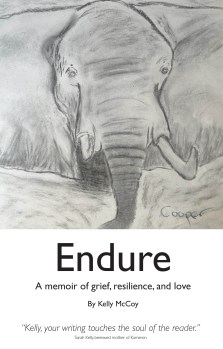
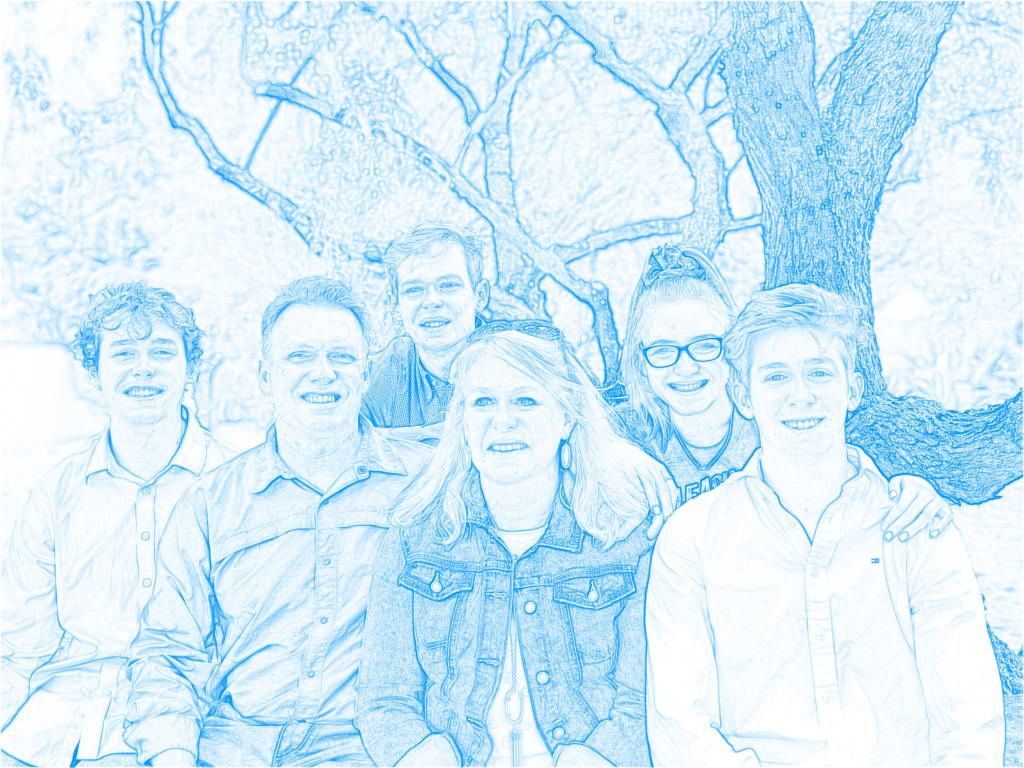
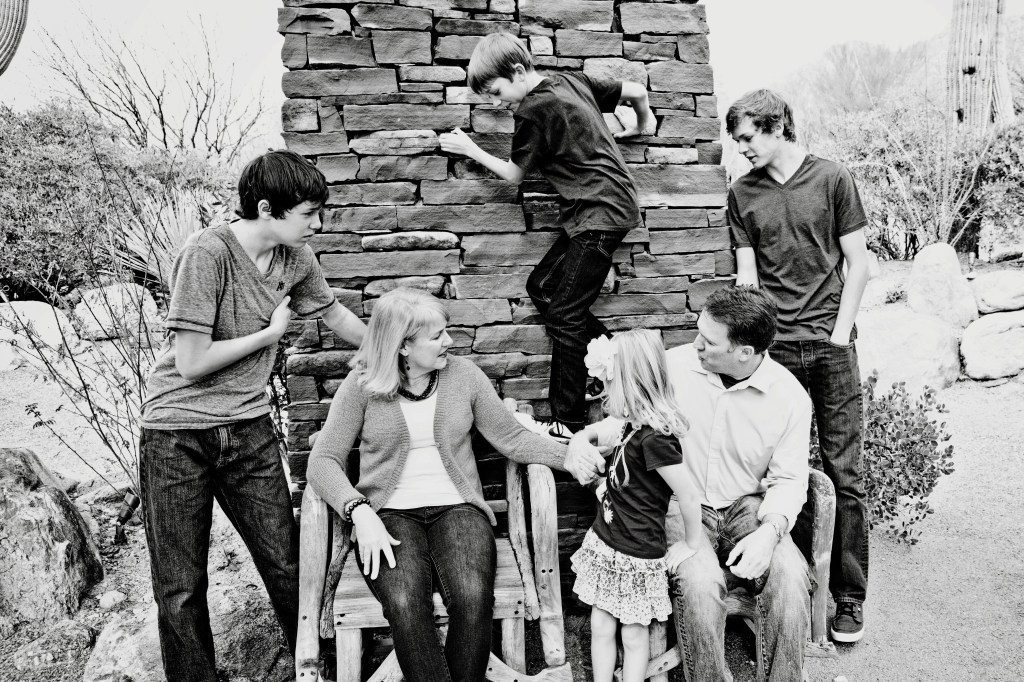
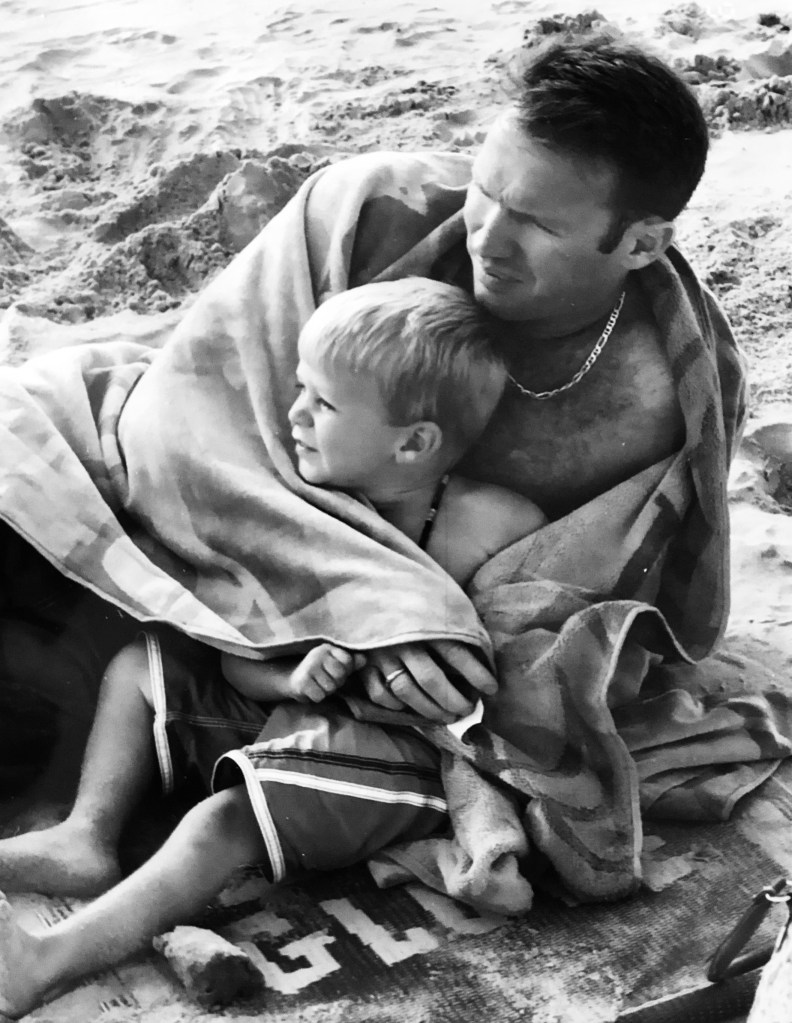



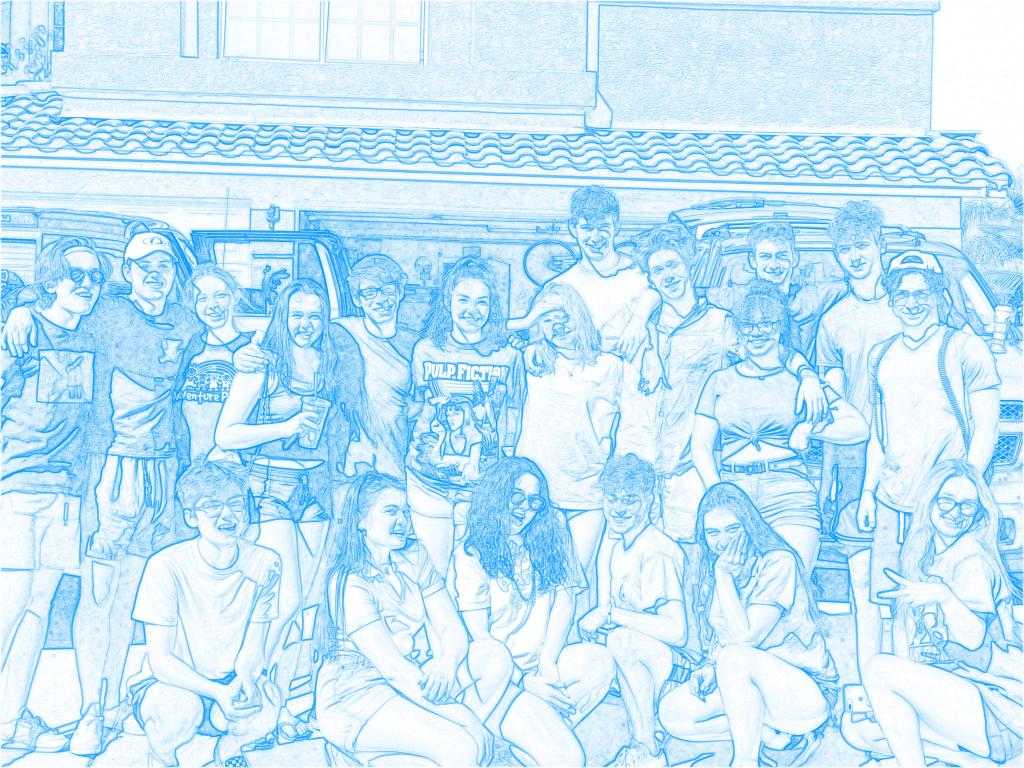
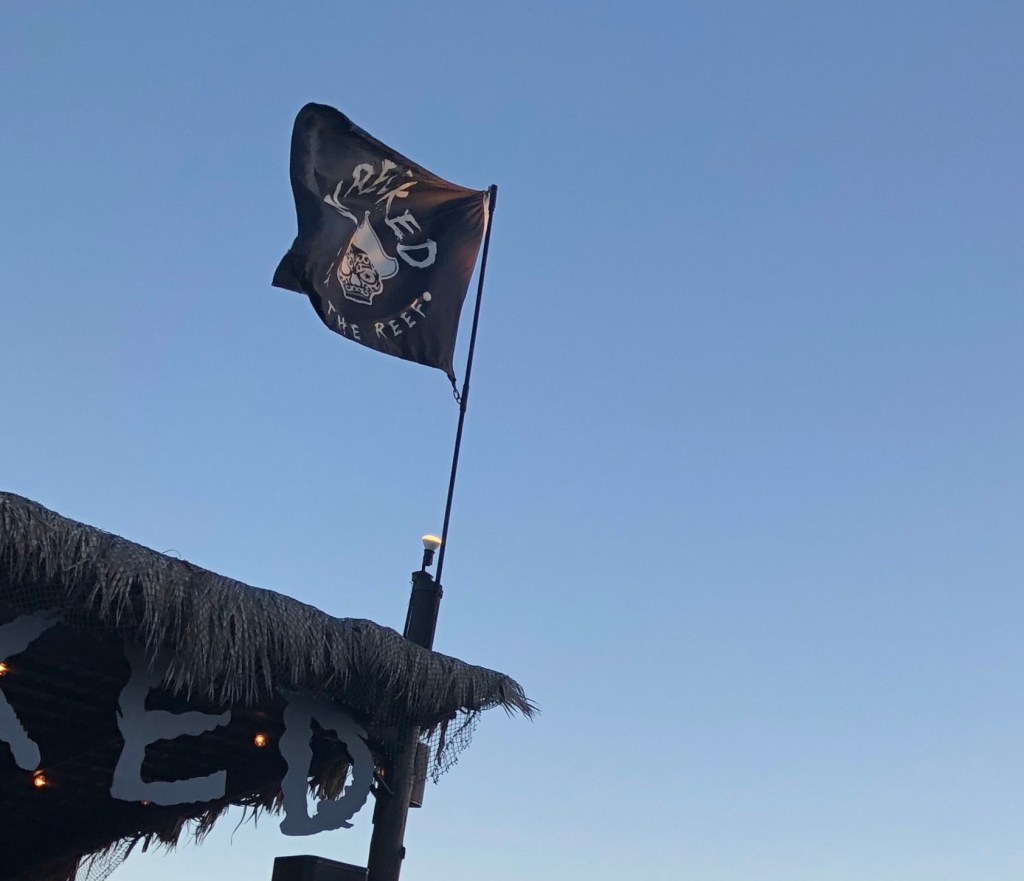



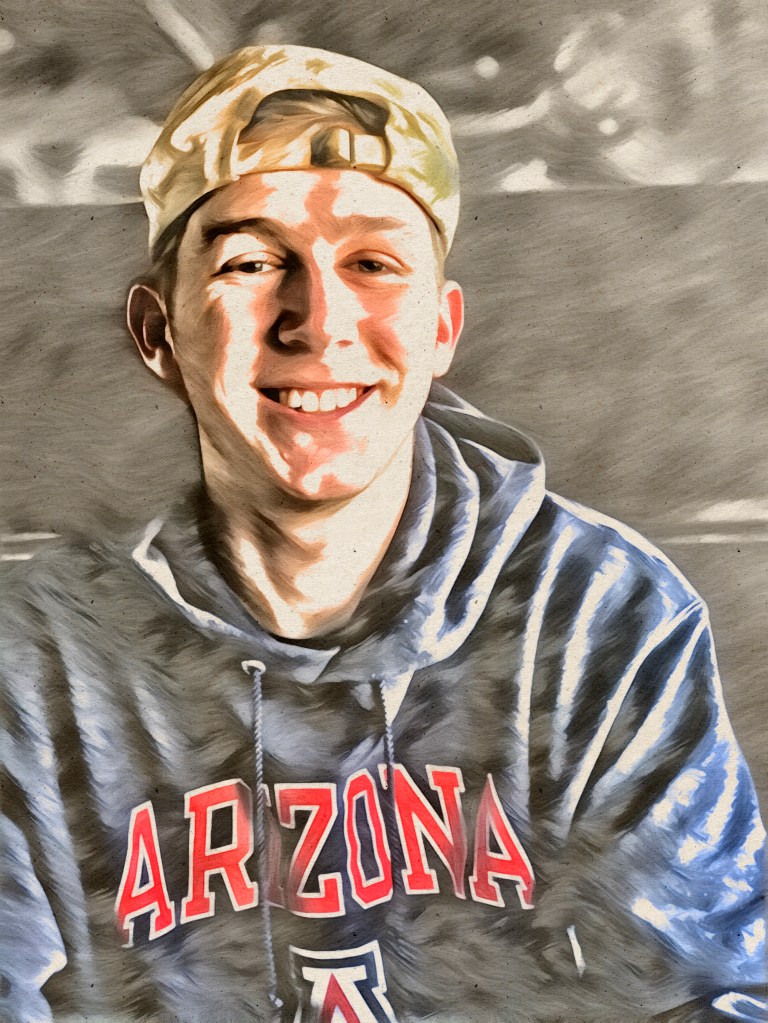
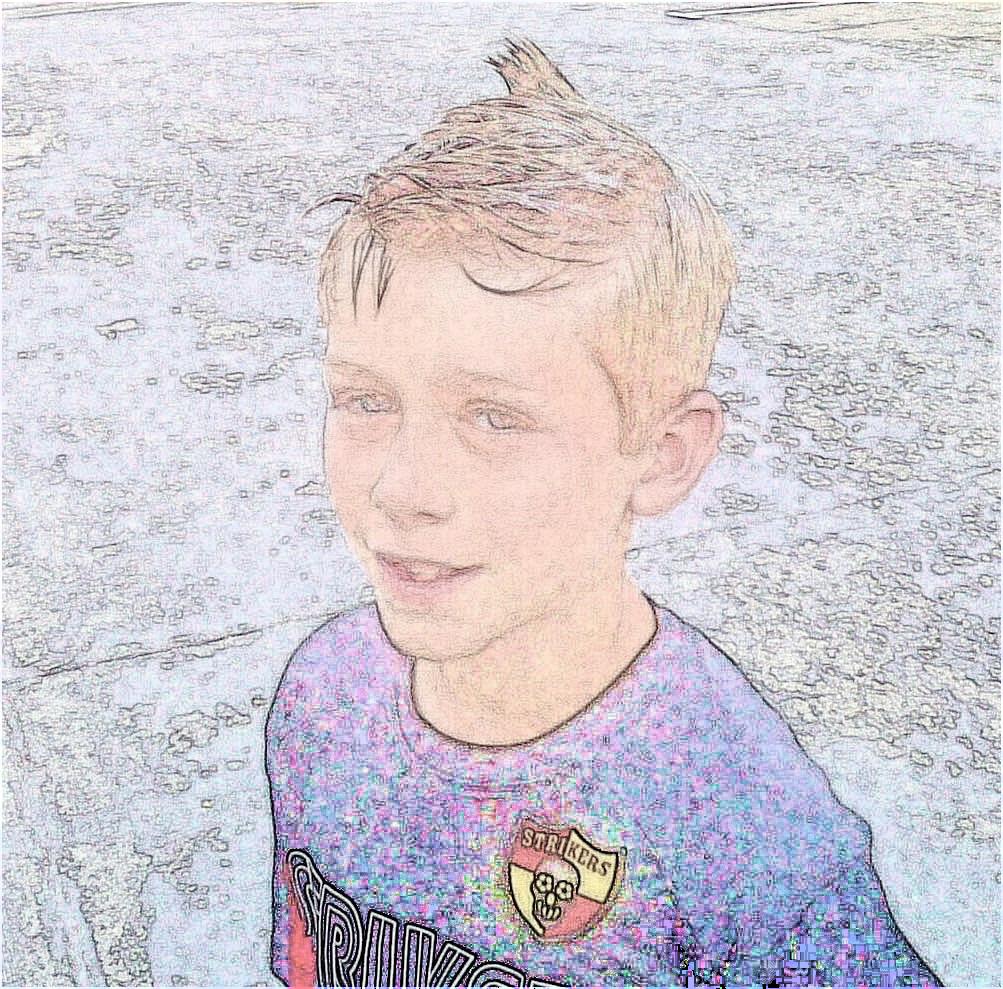
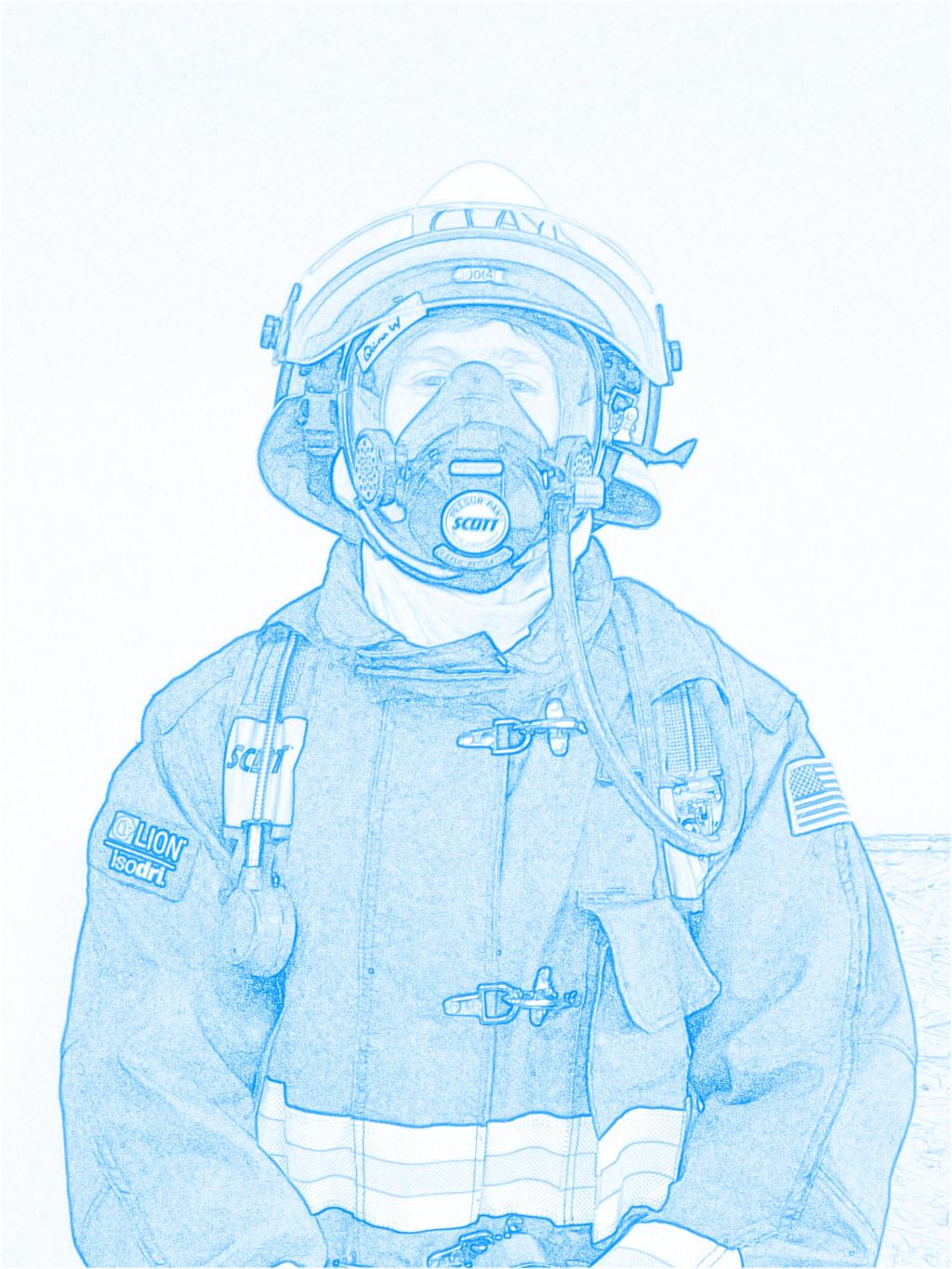
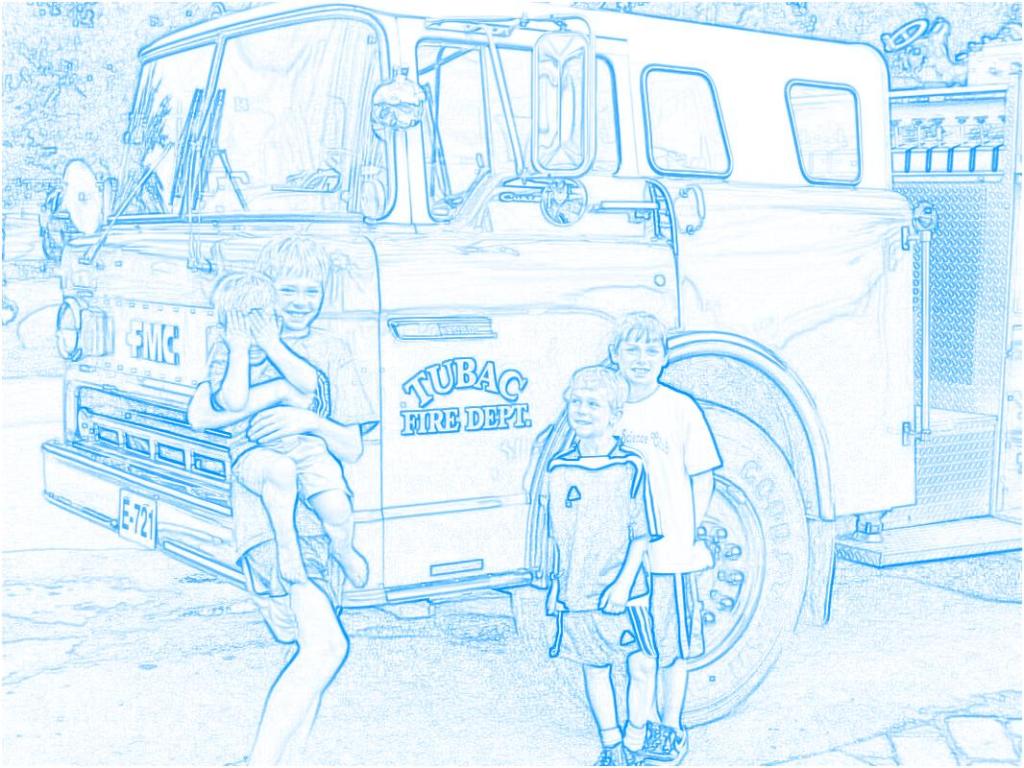
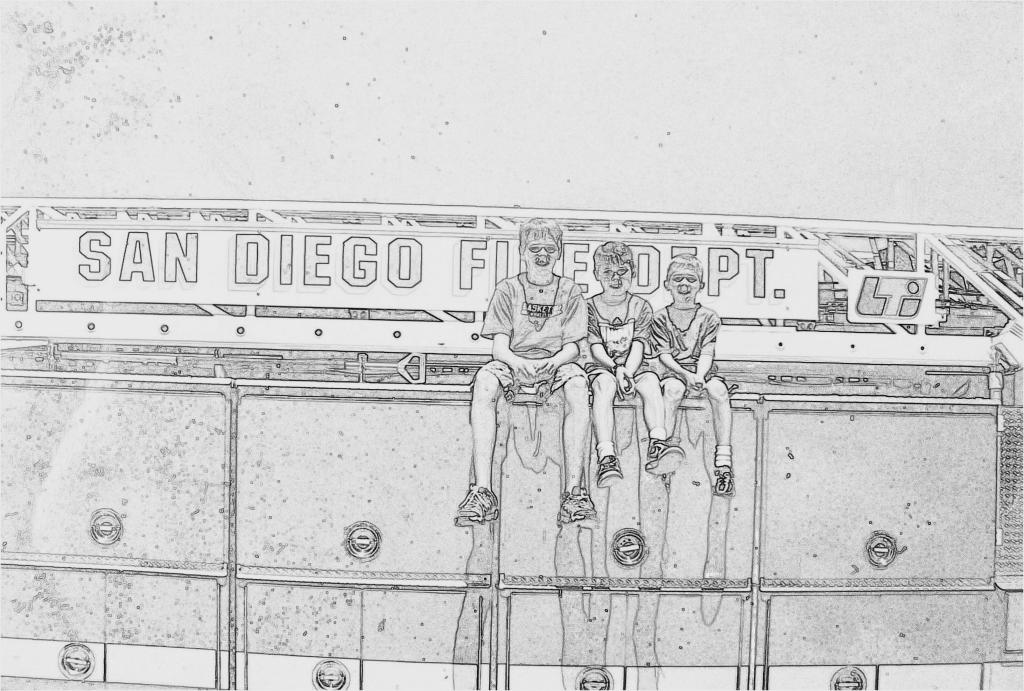
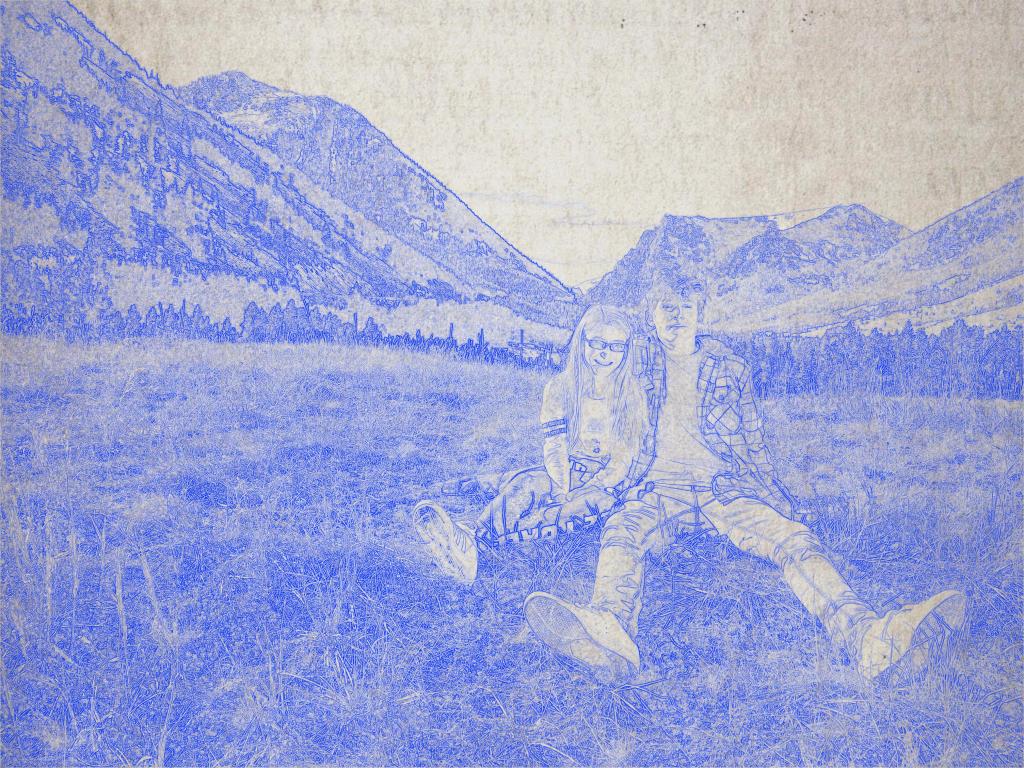
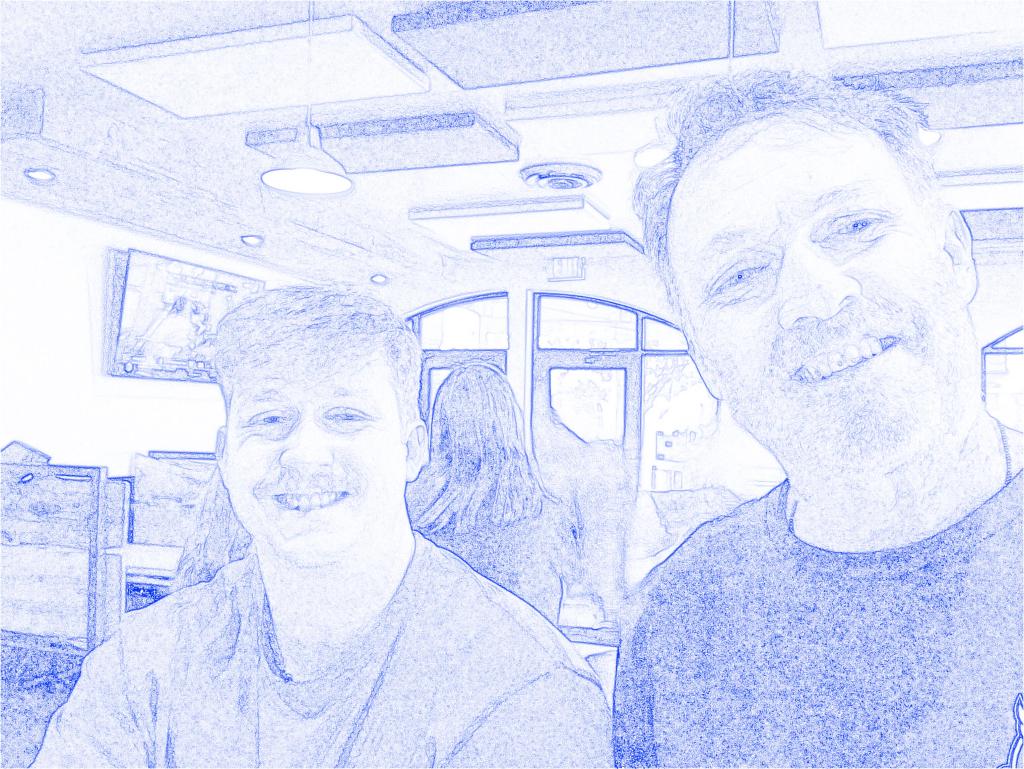
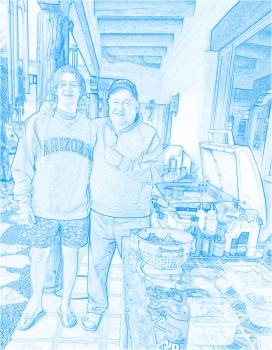
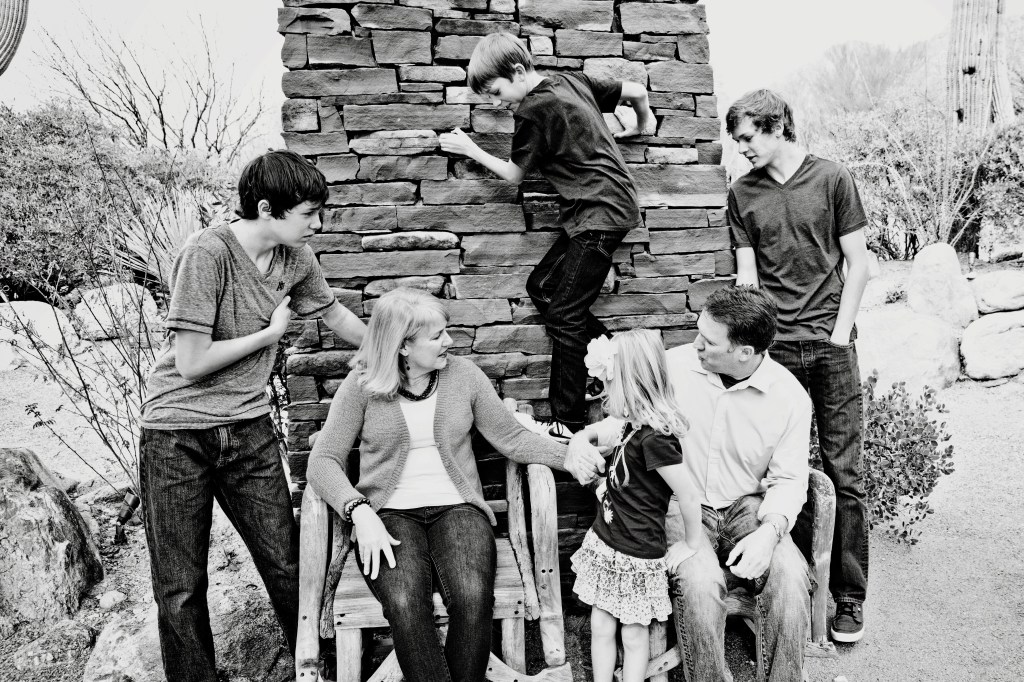
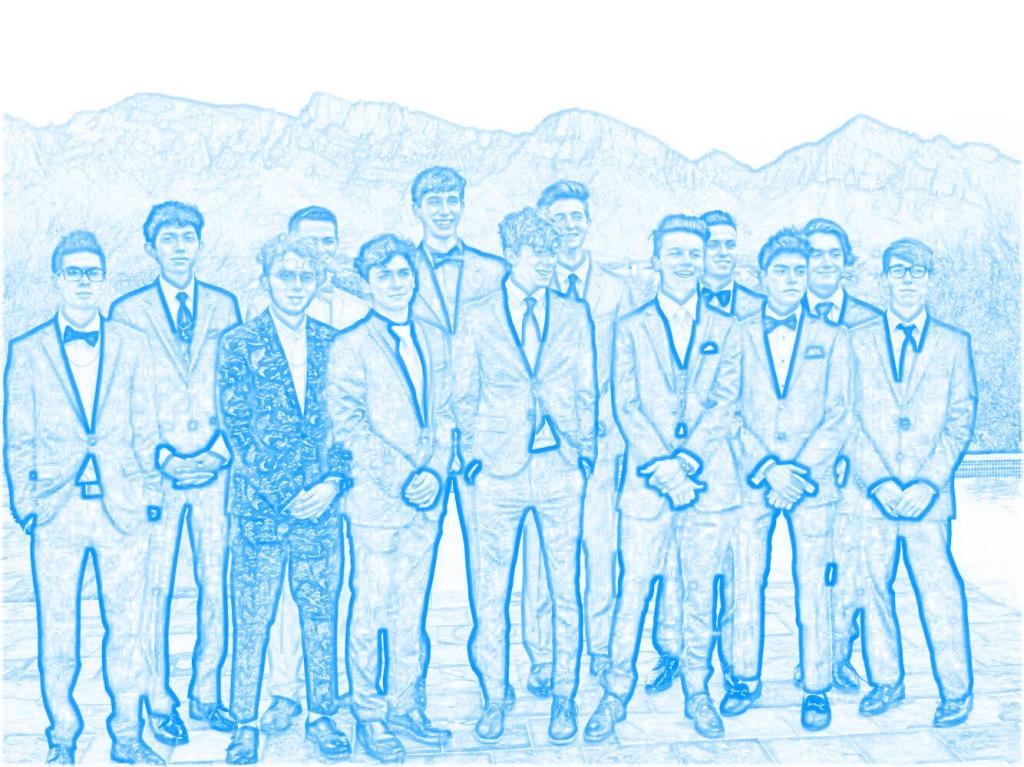
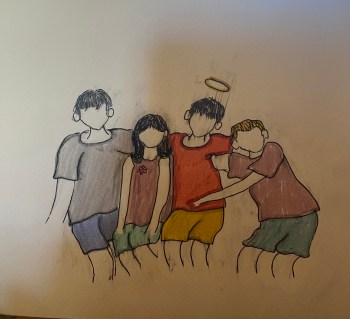




 Endure