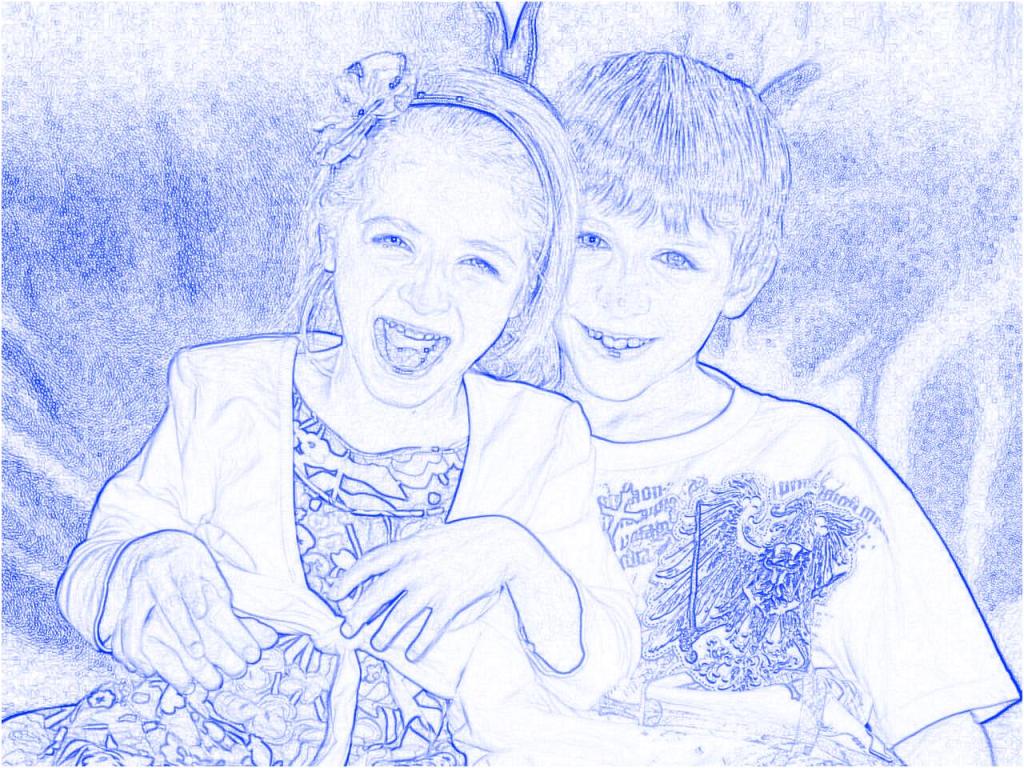
Today is our daughter’s graduation from high school. We are so proud of her and the hard work she has put in over these last four years. Grace, a.k.a., Little Miss Sunshine (LMS), has had an amazing journey, she has a beautiful story to tell, and you would all be very proud of her. Here’s to her new beginnings!
It’s also bittersweet because we know how much Cooper loved his sister and how happy he would be for her today. I pray he is somewhere up there, smiling down on us.
Sunshine’s brothers, her future sister-in-law, and Nanny and Poppy from Arizona are all in town. We’re all here, and we’ve been celebrating. Trying to celebrate. Doing the best we can to celebrate.
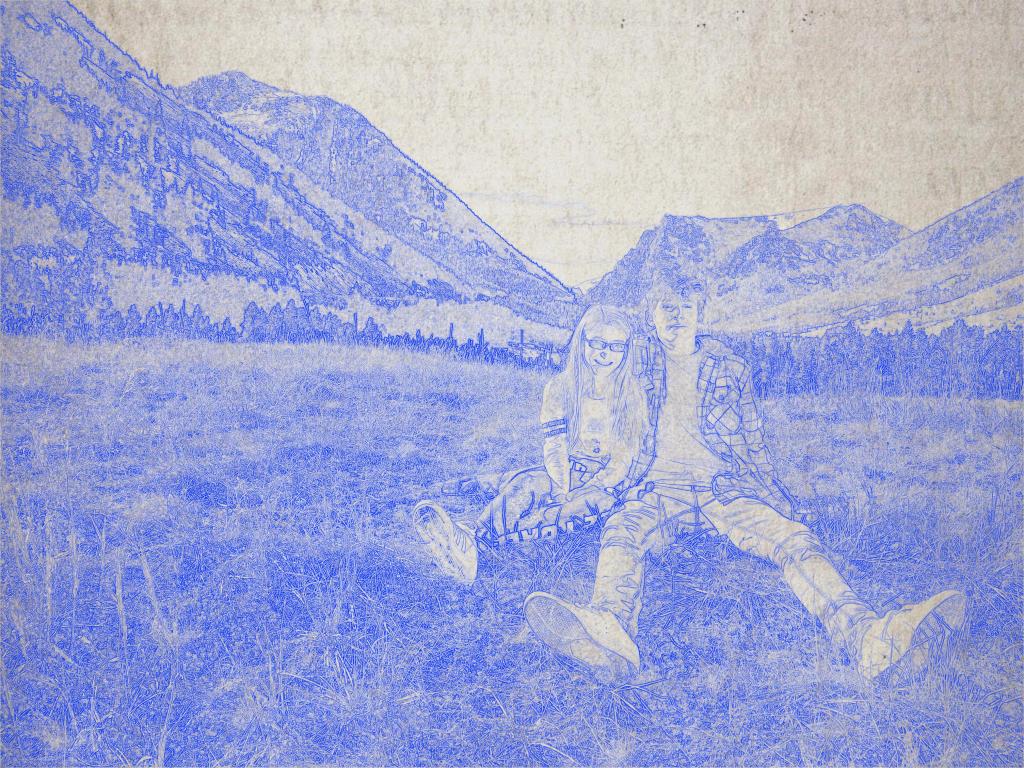
In 2017, I was in Bozeman, MT, having dinner with my cousin “KK” at a local eatery. During dinner, KK explained to me that one of her favorite things in life is celebrating. She loves to celebrate all of life’s occasions. I thought this was cool, but to be honest, I had never thought much about celebrations, and as a general rule, I don’t tend to celebrate very well.
Yay, you scored a touchdown, awesome, that’s your job, now get off the field. What does Jocko say? “Nobody cares, work harder.”
This idea of celebrating, as shared by my cousin, is on my mind more frequently these days. It’s very easy to be consumed by grief and thoughts of Cooper—all the time. After the loss of our son, celebrating birthdays now seems like a bigger deal to me. Our oldest son just celebrated his 29th birthday, and it’s a big deal, worthy of celebration.
I am finding, though, that celebrating is not so easy. I am having to be very intentional to embrace Sunshine’s accomplishments and focus on her, this special moment, her success, and her commencement this evening. I am surprised by how hard it is to stay focused on the good happening right now, here, today.
I am trying to say: our daughter’s graduation is highlighting how difficult it is to celebrate these days, even though I want to and I have a greater appreciation for it.
The last time our boys, daughter-in-law, and Nanny and Poppy were in town was in the immediate aftermath of Cooper’s death. What we are discovering during this visit for Grace’s graduation is that the body does indeed keep the score.1 There are triggers.
Even though we are “celebrating,” it’s hard not to notice the gaping hole of Cooper not being here. We all feel it and sense it. Our bodies are saying to us, “Hey, the last time you all were together, things were not good.”
During these few days together, with family in town, I am also realizing how important my daily routines have been to my healing process. I’m not in routine right now, and I feel it. My shadow is long these last few days.
Truth be told, I have felt good over the last few months. Smaller shadow, less casting. I have become aware that things are going to be okay. Not great, but okay. I have genuinely sensed some level of healing taking place in my life.
I went back to work part-time in March, working within community risk reduction. Four weeks ago, I was at a public school delivering risk reduction curriculum to second graders. In one scenario, I was working with a small group of students, teaching them how to call 9-1-1 on a real phone with a 9-1-1 training application installed on it. It’s a pretty cool, high-fidelity learning device for second graders.
This one little girl said her name into the phone, and the phone misheard her and began to call her “Pandoras.” This little girl let out the most authentic laughter I have ever heard, and she could not stop laughing. Her laughter was infectious. Before I knew it, I too was laughing. Authentically, from the deep place, bubbling up to my face, I was laughing. My spine was shaking. Real laughter.
We finished with the group, and I was standing, waiting for the next group, outside, in the sun, on a beautiful day, watching a Cooper’s Hawk. I remember thinking to myself, I am healing. I said to myself, that laughter just now was genuine. It registered with me that it was the first time I had authentically laughed, from my soul, since Cooper had died. I think it was a good sign.
Back to all my family in town. With the triggers firing from the last time we were all together—genuine trauma—and with my routine out of balance these last few days, it’s given me pause to realize how raw I still am. I’m not healing as much as I thought I was.
Remember, I don’t expect to be fully healed from the loss of Cooper, but I do expect that healing will take place. In resilience studies, there is recovery, adaptation, and transformation. In general, I think society, maybe family and friends, expect bereaved parents to recover at some point in time. You know, to “bounce back.” To get back to who we were, and rather quickly. What really happens is transformation. We will not be the same people we were, and whoever the new person we will become through transformation will take a long time. Years. At least five, likely twenty or more.
I will outlive my life before I become the new me.
In the days after Cooper’s death, I ran into my neighbor while I was walking the dogs. She works in mental health. She gave me sage advice that has stayed with me. I remember our conversation vividly. It was early, around 7 a.m., and we were talking across the street, as we both had our dogs and mine was being a barking nuisance. She said, everyone is going to grieve at different paces and in different ways, and you just have to accept it.
I see it with my family, with my children, how they all are grieving differently and in their own unique way. I have come to call this a “grief fingerprint.” I think we all have our own grief fingerprint, and we are going to grieve in our own way, at our own pace, and nobody’s grief fingerprint will look like another’s.
I read three books immediately after Cooper died, I read everything I could get my hands on in Cooper’s iPhone, and I joined The Compassionate Friends. I did not do formal counseling. My wife, meanwhile, hasn’t finished a single book, hasn’t read any of Cooper’s text messages, and she cuddles his hoodie at night. Different fingerprints.
I can see how different grief fingerprints could create challenges in relationships, including marriages. If a couple starts to diverge too significantly in how they are processing grief, and their timelines are very different, it’s bound to create some stress in the relationship. This is why I think it’s important to know this is likely to happen and to simply “embrace the suck.”
I am grateful our loss has tended to bond our marriage closer. We are very kind to each other, and we give each other wide berth to process and deal in our own unique way. We are, for better or worse, trauma-bonded.
The other thing I am aware of these past few days is that I find it difficult to compartmentalize my emotions. Happy bleeds over into grief. I am happy and joyful for my daughter. I want to lean in hard and celebrate her special day, and yet my joyful emotions get confused in me with grief and sadness, the big gaping hole in my chest, the emptiness, the negative space of hurt, good ol’ Melancholy Man.
Does this resonate with others who are grieving?
My emotions don’t have distinct names and places inside me, as they used to. Now they’re just emotions. Said another way, all of my emotions, even the good ones, somehow have a tendency to anchor back to grief and the loss of Cooper.
I think with intentionality, I can work on this, but it is an observation.
As a kid growing up, I remember learning about the Kubler-Ross five stages of grief model. I suppose, initially, I had the idea that grieving the loss of Cooper would be something like this model—five stages. I thought, I guess, that I would move from one stage of grief to the next, sort of self-actualizing up the pyramid, like Maslow’s Hierarchy.
I would take anger and bargaining with God to be good signs that I was coming around, working my way through the five stages of grief.
I am not suggesting the Kubler-Ross five stages of grief model is applicable to the loss of a child. What I am saying is that, up to now, I would have assumed it was. And I think most of society, rightly or wrongly, would apply this grief model to a bereaved parent.
Seven months after Cooper’s death, it’s now very clear to me the Kubler-Ross five stages of grief model is not a good framework for mapping the grief journey following the loss of a child, or a brother, or a grandson.2 In my experience, it’s not applicable. Maybe don’t throw the baby out with the bathwater, but I am not inclined to use this model as a touchstone for navigating the grief of losing a child.
While I was with my Compassionate Friends group earlier this month, we were talking about the impulses that come over us in the early months of grieving; in the early years of grieving. You know, like giving the bird to the world, selling your belongings, and becoming a nomad. Alcohol, drugs, promiscuity, risk-taking, anger. All the things.
The impulses are there, for sure. Because who cares now, you’ve just experienced the worst thing ever, so screw it, go for broke.
You can’t hurt me now, or something like that. I understand this line of thought.
But that said, I maintain that we have an obligation, a duty, to grieve in a healthy manner the best we can. If we, as a family, can all abide by this, then the style and pace of our grieving doesn’t matter. We can give each other wide berth.
The truth is, our family is tender, raw, and very exposed. I can see it’s going to take serious and mindful navigation to keep us all together, healing, and kind to one another over the next few years.
I’m drawn to the voyage of Ernest Shackleton on the ship Endurance. All of his men survived that trip, intact, despite the incredible challenges they faced.
That’s how I feel as a husband, father, son, brother, and friend right now. I am asking myself, how do I lead my family best during this very tumultuous season of life and ensure everyone survives, thrives, and comes out on the other side of the valleys, intact?
Perhaps it will only be by the grace of God. I am convinced, if God shows up, it will be through people acting on His behalf. I don’t expect to encounter God. I expect, I suppose, to encounter God through good people acting in His name.
Friends, these last few days of having family in town to celebrate Sunshine’s graduation have made it clear to me that this is going to be a long journey through many valleys. There will be danger.
Yea, though I walk through the valley of the shadow of death, I will fear no evil, for You are with me; Your rod and Your staff, they comfort me. Surely—surely—goodness and mercy will follow me all the days of my life. If Cooper is in the house of the Lord, then yes, I do want to dwell there forever.
- Van der Kolk, Bessel A. The Body Keeps the Score: Brain, Mind, and Body in the Healing of Trauma. Penguin Books, 2015. ↩︎
- Bereaved mother of John Paul Raphael, Elizabeth Leon, shared some helpful insights in a comment on my blog. She suggested looking into Worden’s Tasks of Mourning or the dual-process model as more descriptive frameworks for understanding child loss over long periods of time. Reference: Leon, Elizabeth. Personal communication. Comment on Endure.blog 21, May, 2024 ↩︎


 Endure
Leave a comment