I have been a teacher of resilience. For real. I’ll spare you the details and save them for another time.
There’s a particular movie I like to share and talk about in my resilience classes: Leave No Trace.1
Leave No Trace is the story of a combat veteran suffering from mental health issues while raising his daughter in the forest on the outskirts of Portland, Oregon.
The father and daughter are, generally speaking, doing well. They are happy. They are together. They are laughing. But the state has a different view. A man can’t be raising his daughter in the woods; this is not normal behavior. Father and daughter get arrested, and they are pipelined into the system, where the state government and non-profits try to “help” them.

The reason I like this movie as a discussion piece for resilience is that it brings up three important questions that demand reflection and consideration. First, who judges what “doing well” after adversity looks like? Secondly, who judges what “adversity” is? And finally, is resilience an internal feeling or observed external behaviors and competencies, or both? The point is, there are judgments made in resilience. Who’s making them?
As I’ve been writing about child loss, I’ve been using the metaphor of holing up in a Nepalese cave, drinking yak’s milk with the shamans to heal.
I’m not literally holed up with the shamans in Nepal, but I ask you, if I were, would I be wrong?
Cooper died. If I bought a plane ticket tomorrow to Nepal and left for three months, and this brought great solace to my soul and helped me heal, would this be a resilient move?
In another scenario, if those who have lost a child show up to work and do their jobs well, even though there’s a gaping hole of sadness and empty loss in their chest that nobody can see, and they weep all day long on the inside, but nobody knows, and they smile on the outside—is this resilience?
They (we) look resilient, but what’s going on inside, and does this matter in resilience?
Let’s say, for the sake of clarity, that resilience is both an internal state of wellness and external competencies that can be observed by others. I both feel good in my chest, subjectively, and I behave like a competent adult in the domains of my life—people see me doing well (at work, for example).
Resilience: after the loss of my son, I care for myself, my family, and I do all the things at home and at work, and I smile—and my smile is a genuine reflection of my insides.
All good. Question: how long should it take to arrive at this place? How long will family and friends, society, give me to find warmth in my chest, strength in my bones, a smile on my face, and the ability to do all the things at home and at work?
In all manner of Western society, our culture strives for efficiency. More, better, faster. Is there a bypass in this system for the loss of a child? Doubtful.
I’ve only been in the bereaved parent game for four months, and my observation is this: those who have lost a child are rushed along to heal. As a result, many parents (grandparents, siblings, and friends) smile and fake it. Meanwhile, parents and siblings cry rivers of tears on the inside—and nobody knows.
Ought they to know? Excuse me, Jackwagon, could you pull your head out of your self-absorbed backside for two seconds and acknowledge my pain?
As for myself, when Cooper died, I resigned from my job immediately. It’s a little more nuanced than this, but let’s not let details ruin a good story, shall we?
For the last four months, I’ve been holed up in my home (my Nepalese cave) drinking yak’s milk (coffee, tea, water, craft beer) and hanging with the shamans (prayer, spiritual reading, and attending church here and there).
I wanted to marinate in my grief and take it on the chin. Give it to me. If I can’t take it, I accept death. Only bury me standing—as an act of defiance.
It’s not been easy. I am grateful I’ve had this time to find some healing, to slowly think through everything and to process at the level of my soul.
God is the breath within the breath. At this level, I wanted to stand alone before God and have a serious conversation, out back, just the two of us. I’m serious. If You’re going to lay this one on me, Lord, You better be ready to dance. I want to press my nose up against Your nose and look into Your eyes.
I digress. Through this time and deeper introspection, I have found some healing. I do have a sense of warmth and radiance in my chest again, though it comes and goes. But it’s staying longer. A smile, too.
Yes, I get things done, too.
Over these last four months, I have grocery shopped, cooked, and cleaned. Not a big deal to a retired firefighter, this is what we did. My wife is working full-time, and I have striven to take the load off her so she can heal. My wife is approaching her grief in drips. It’s healing for her to be at work, to turn her mind off in relation to Cooper, and then come home and process a little at a time.
She’s sipping wine, I’m doing shots of tequila.
But notice: whereas I have been exploring the dark wilderness in my heart, drinking yak’s milk with the shamans and praying, my wife has been working and crying on the inside.
Both resilient moves, but it looks different.
I start work next week, part-time. I’m back at it, and I feel really good about it. My cave has done me well.
I still have grief, sadness, a great sense of loss, and I imagine I always will. I don’t see this going away. But I do see the rough edges smoothing out. The intensity is gone, except for a few brief moments here and there.
In the end, this all still seems incredibly tragic to me. I still feel, with every bone in my body, that the Universe got it wrong. I believe that. This was not meant to be. It’s a glitch. But I’m no dummy; I am certain every parent who has lost a child feels this. But it is a glitch, right, to have a child predecease you?
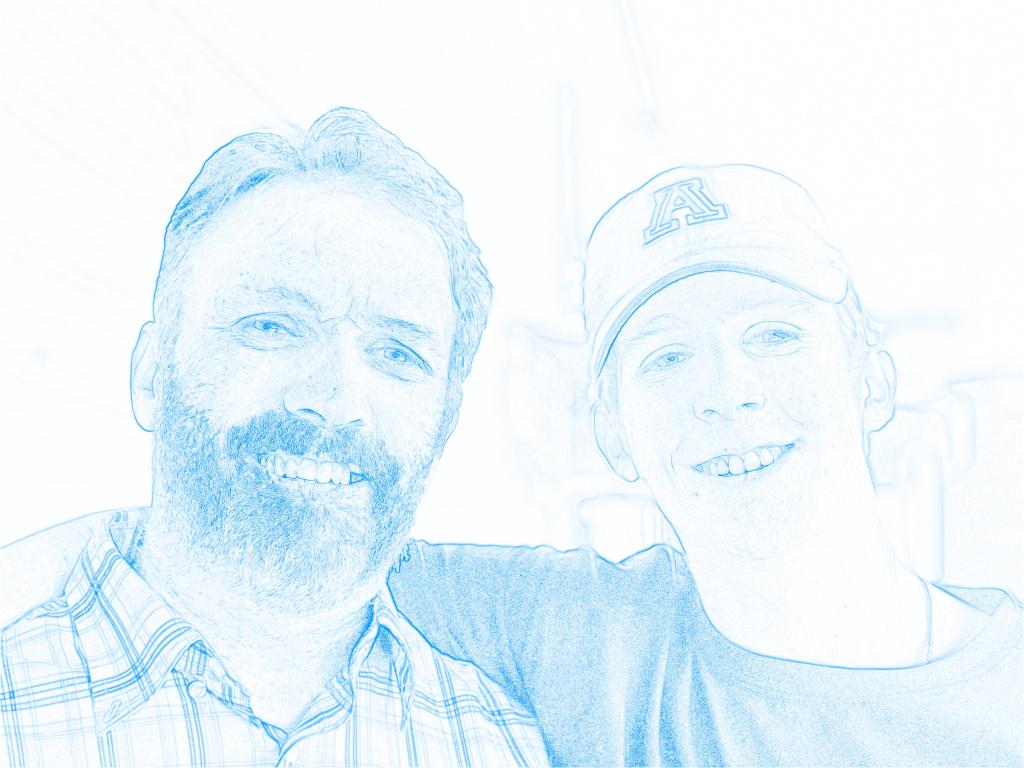
Mostly, I miss my son, Cooper. He was a good boy to be sharing life with. He made this world a better place with his presence. He certainly made me happy as a father. I was blessed to have him for 23 years.
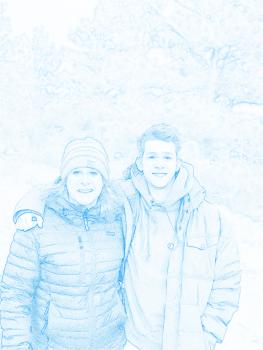
One last thought for today. For the better part of the last four months, I have spent a lot of time looking at pictures of Cooper. I still do, but I am now very intentional about looking at the pictures of my three other children, Cooper’s brothers and sister, and thinking, reflecting, and praying over them.
I’m trying to say, I’m playing peekaboo with the future—with hope—and I think this is a good thing.
- Leave No Trace. Directed by Debra Granik, performances by Ben Foster and Thomasin McKenzie, Bleecker Street, 2018. ↩︎


 Endure
Leave a comment