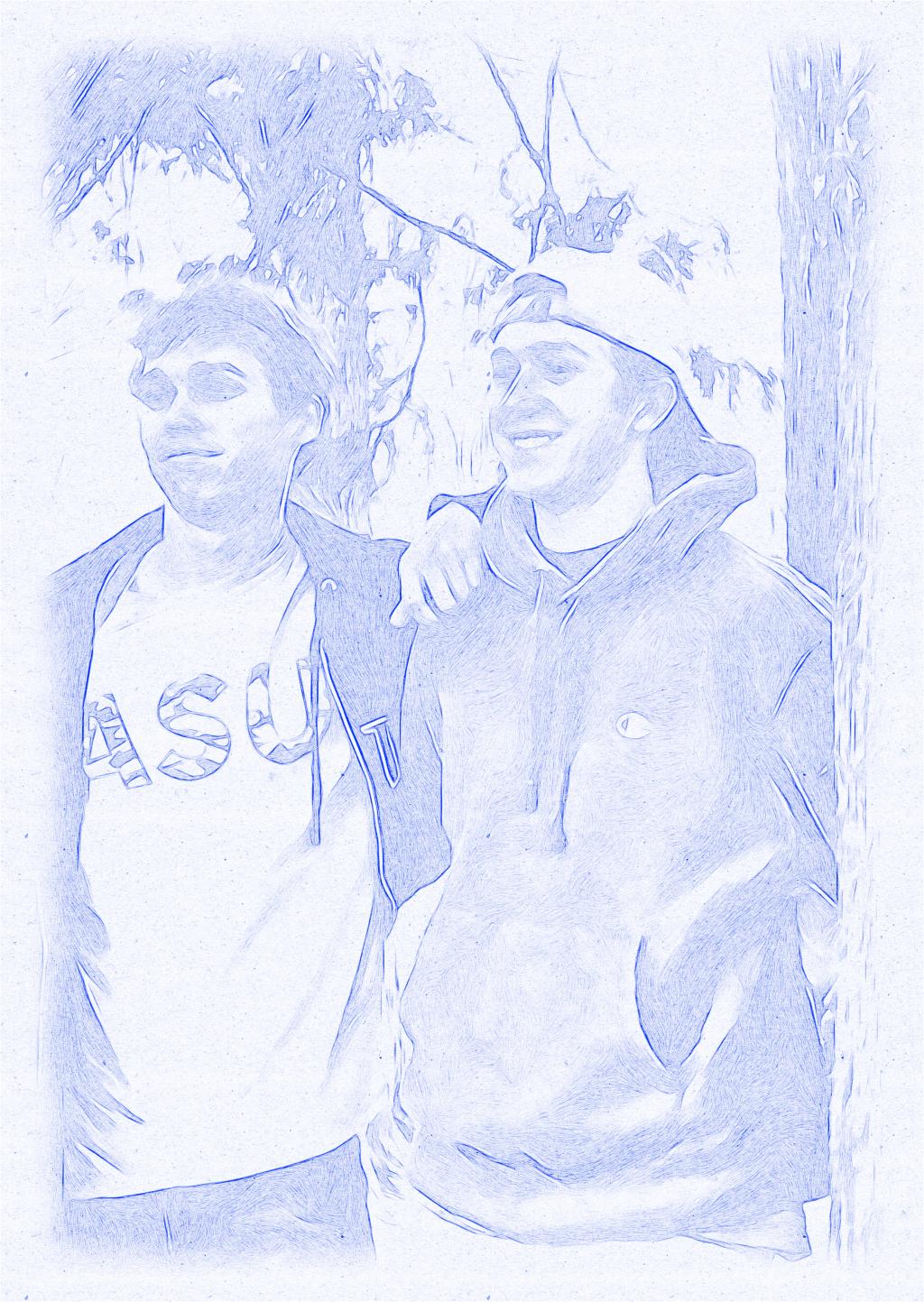
A few weeks back, on impulse, I asked my wife, “Do you care if I drive to Tennessee to see my brother and stay for the weekend?” She didn’t mind, so I asked my brother the same. He said, “Get on out here.”
I drove to Tennessee, just east of Knoxville—about a 12-hour drive from my house. Part of what I was looking for on this trip was, in fact, those 12 hours of drive time by myself, to think, reflect, and zone out. I was able to think about Cooper, grief, this pain, this process, our family, the future, hope, my faith, and all the things.
My time in Tennessee with my brother was good too, because I was able to put my physical body and mind in a new space for a weekend. All the reminders of Cooper I have at home—which are not bad—I was able to take a break from. I was able to breathe a little more deeply for three days, and this deeper breathing has stayed with me since I got back home.
We stayed busy in Tennessee. We did a pub crawl in downtown Knoxville, drank some brilliant craft beers, smoked a fine cigar, and ate an iconic meal. The sun was out, the weather was exceptionally beautiful, and it was very nice to be with my brother. I also spent time with loved ones and family.
We’re four months in, post-Cooper’s death, and I guess I would say to those going through grief: if your mind and heart have been pining for a road trip, take it. Go. I don’t think you will be disappointed.
That said, it was nice to be back home with my wife and daughter. I have found through this experience that it’s very hard for me to be away from my wife (and daughter) and our home for very long. My home has become my cave in Nepal, where I drink my yak milk.
An Observation.
My emotions are all mixed up in the months following Cooper’s death, in my grief. As an example, my wife and I recently watched a romantic comedy on Netflix. Great show, good clean fun, happy and emotional. But there were emotions. It’s quite strange that even my good and happy emotions are now showing up mixed with grief.
My wife is experiencing the same thing at school, where she teaches second graders. She will have some good emotions that have nothing to do with Cooper and grief, but they still express themselves as related to Cooper and grief.
I want to say, as I am experiencing grief, my emotions are a mixed bag. Even good, happy, fun emotions that have nothing to do with grief show up as tinged and colored with grief.
Another Thing.
My previous boss at the university, a fine woman and friend, texted me recently and asked if I wanted two tickets to the college basketball game. Of course! I took my daughter, Little Miss Sunshine, to the game, and she loved it.
I had a good time too, but I did learn that it was too much stimulation. I am learning in my grief that I can enter environments that are overstimulating in a way that wouldn’t have bothered me before Cooper’s death.
Incidentally, we were at our monthly The Compassionate Friends meeting last night, and one of the mothers said that her life has been lived in two epochs, so to speak. There is her life before her son died, and her life after his death. There is indeed a demarcation line for those who have experienced significant loss. Before Cooper’s death (BCD), a basketball game would not have registered for me. After Cooper’s death (ACD), I’m not sure I’m inclined to attend future sporting events, or events where there is too much going on. A new reality.
Ending.
In the post I wrote, Aftermath, I spoke about how hard Christmas was. It surprised me and set me back a few steps in my grief. I’ve had another event like that recently. We have been patiently waiting to receive Cooper’s death certificate from the state’s coroner’s office. A few weeks back, before my trip to Tennessee, we received it.
Along with the death certificate, I had asked the coroner’s office for the autopsy and toxicology reports. There was something about actually getting these reports and reading them that set me back a few steps in my grief. It was really hard reading, “Manner of death: suicide.”
Also, the autopsy report went through some of the basic mechanics of death—not in detail, but a little more than I knew—and while I already knew it, it was still simply hard to read.
Cooper’s toxicology report was a nothing burger. He had a few beers on board, below the legal limit, which we already knew, and that’s it. In a very weird way, this was kind of disappointing. There was a part of me secretly hoping for him to be loaded with drugs, to help me rationalize and explain his death. “Ahhh,” I would say, “he was sky-high and not in his right mind; now this makes more sense.”
Truth Be Told.
Cooper was not in his right mind. He was suffering from a mental health crisis.
The 55-year-old sedentary accountant died from a heart attack, after stressing for the last 20 years over his finances.
The 50-year-old woman died of ovarian cancer.
The 88-year-old grandfather died of Parkinson’s disease.
Tragic as these examples are, they don’t cause us to revolt to the level of stigmatization. We sort of accept them on some level as tragedies of life. We don’t like them, nor should we, but we have familiarity with these stories. They flow with the fabric of life.
The 23-year-old recent college grad died of mental health disease, via self-harm.
We revolt. And we should. And I want to frame Cooper’s death in light of a disease process, not unlike cardiovascular disease, cancer, and Parkinson’s. A disease process which also has crisis inflection points—exacerbations.
We should not normalize suicide; it’s not okay. But we should not stigmatize it either. Let’s talk about it.
What’s been amazing to me in these last four months, as I have written this blog, is the number of people who have opened up and shared with me their own stories of mental health issues and suicidal ideations. As I have exposed myself, opened up, and been vulnerable in my writing, people feel trust in sharing with me.
To all those who have a semi-colon1, blessings and love upon you.
To those not feeling it, you are loved and cherished, and you really are enough, just exactly as you are. Feel the ground, take a deep breath, slowly, deeply, and completely.
It’s the cracked ones who let the light in. And your journey is exquisite.
9-8-8 if you need it. No shame.
- “Suicide Prevention: The Significance of the Semicolon.” A Second Chance, Inc., www.asecondchance-kinship.com/suicide-prevention-the-significance-of-the-semicolon/. Accessed 26 Oct. 2024. ↩︎
 Endure
Leave a comment