Many years ago, I attended one of those generic leadership seminars. I honestly cannot, for the life of me, remember the name of the event. It was held at the local indoor sports arena. It was a packed event with literally thousands of attendees. Of particular interest to me was speaker Dr. John C. Maxwell. He is the reason I attended the event—I wanted to hear him speak.
Surprisingly, however, it was an unknown military speaker who had the greatest impact on me. I love being surprised by the positive when I least expect it.
One time, my flight was delayed going through Dallas Fort Worth Airport—I know what you’re thinking, that’s weird, flight delays rarely happen at DFW—and I was sitting in those little airport seats, zoning out and people-watching. Unexpectedly, two young children, about five years old, who did not know each other, started the mirror game. You know, one person does some type of body movement, and then the other person mirrors it or makes something up. The spontaneity of their interaction and the innocence touched me. There was not a face in that section that wasn’t wearing a smile ear to ear watching these kids. Serendipitous magic, right there.
Like this, the military leader surprised me. He was not all “Hoorah!” beating his chest. He was deep, philosophical, intelligent—and a good orator. He gave an exceptionally good presentation, and I remember taking a lot of notes. Sadly, I don’t recall this leader’s name today, but by now, if you have been following my writing, you know we’re not going to let details ruin a good story.
The key concept this leader presented was what he called “move it to the right.” It’s what I remember some twenty years later. He was talking about geopolitical, military conflict in the world and how, at least historically, the US military strived to move conflict to the right and de-escalate it. He explained that there were steps along the way, on a continuum, where a conflict could be de-escalated and “moved to the right.”
It’s an adaptation of this model I used to help develop an orphan’s ministry at a church we used to attend. How can the Church help move orphans to the right, into loving homes?
Drawing from this speaker’s concept, I want to borrow from it again and reframe it by saying that following Cooper’s death, there were many people who “made it better.” I believe the wide net of folks making it better for us was critically important in helping with our long-term healing trajectory.
Slow, deep breath; in through the nose, slowly, deeply, and completely, hold it briefly, and let it out slowly, deeply, and completely.
When law enforcement officers from the sheriff’s office arrived at our home on the morning of October 8th to tell us our son was deceased, they made it better. From this earliest moment, our healing process—our grief—was already beginning to be moved to the right and made better.
Let me explain.
The officers who arrived were professional, compassionate, kind, and as empathetic as they could be in the most traumatic situation of our lives. The officers arrived with a chaplain who spent the morning with us as we wailed, vomited, froze, shook, and collapsed. During my years on the fire department, I responded to many suicides and interacted with law enforcement, but now I was on the receiving side of the equation.
It doesn’t seem fair to me. Twenty-five years of helping complete strangers on their worst day, saving the masses one by one, and I couldn’t save my son.
The officers did an exceptional job. Beyond their professionalism in sharing the tragic news of our son’s death with us, they picked up Cooper’s car and drove it to our house. They gave us printed material and their cell phone numbers and told us to call if we needed anything or had any questions. They did a good job of delivering very bad news, and they, all things considered, were the first people to make it better.
The crime scene investigator (CSI) later called us to ask a few questions. He was kind, professional, and eager to help the best he could. I had so many questions. I wanted to come see Cooper’s body. This was not possible because all suicides in the county are investigated to ensure no foul play. This is a good thing, but it meant the chain of evidence couldn’t be disrupted, and therefore, we couldn’t go see Cooper. Also, many of my questions, at this time, couldn’t be answered for the same reason. I asked the CSI, “Would you please go lay hands on Cooper and pray for him, and be sure to take good care of him and honor his body?” His response, “Absolutely, you have my word.” I believed his conviction.
That’s one thing I can say about the folks in the Midwest: in the main, on par, they are good, down-home people who do what they say they are going to do.
I have had several phone conversations with the CSI, including a very recent one, and he has been so incredibly helpful and professional. He, like the officers and chaplain, made it better.
In the first week, we also interacted with a detective from the sheriff’s office. She brought over a bag of Cooper’s belongings, answered my questions honestly, and was kind and compassionate toward us. She gave us hugs. She was sorry, and we knew her empathy was genuine. She, too, made it better.
I want to pause here and share my heartfelt thanks to the county sheriff’s office. Further, I want to give heartfelt thanks to the law enforcement officers who do the tough work they do and let them know that, in our house, they are appreciated and respected for their noble work.
I don’t want to get into politics and the cultural wars. I’m no longer interested. My son’s death transcends the petulant leadership and tribalism of today’s political discourse.
I want to say that on the worst day of our lives, bar none, law enforcement made it better for our family.
Said another way, our grieving and healing got off to a better start than it otherwise probably could have.
After law enforcement notified us, it was time for us to make some calls and notifications. It was brutal.
I have already written about my brother canceling his vacation and flying from Florida to our house to walk through hell with us. My brother, Jason, made it better.
I remember calling my parents. My dad answered. I asked, “Is Mom up?” “Nope, she’s still sleeping.” I said, “This is urgent, you need to wake her up.” My dad walked in and woke Mom up, and I told them both that Cooper had taken his own life last night. I will never forget the wailing of my mom. When we talk about this now, my mom doesn’t remember it; she has blacked it out of her memory.
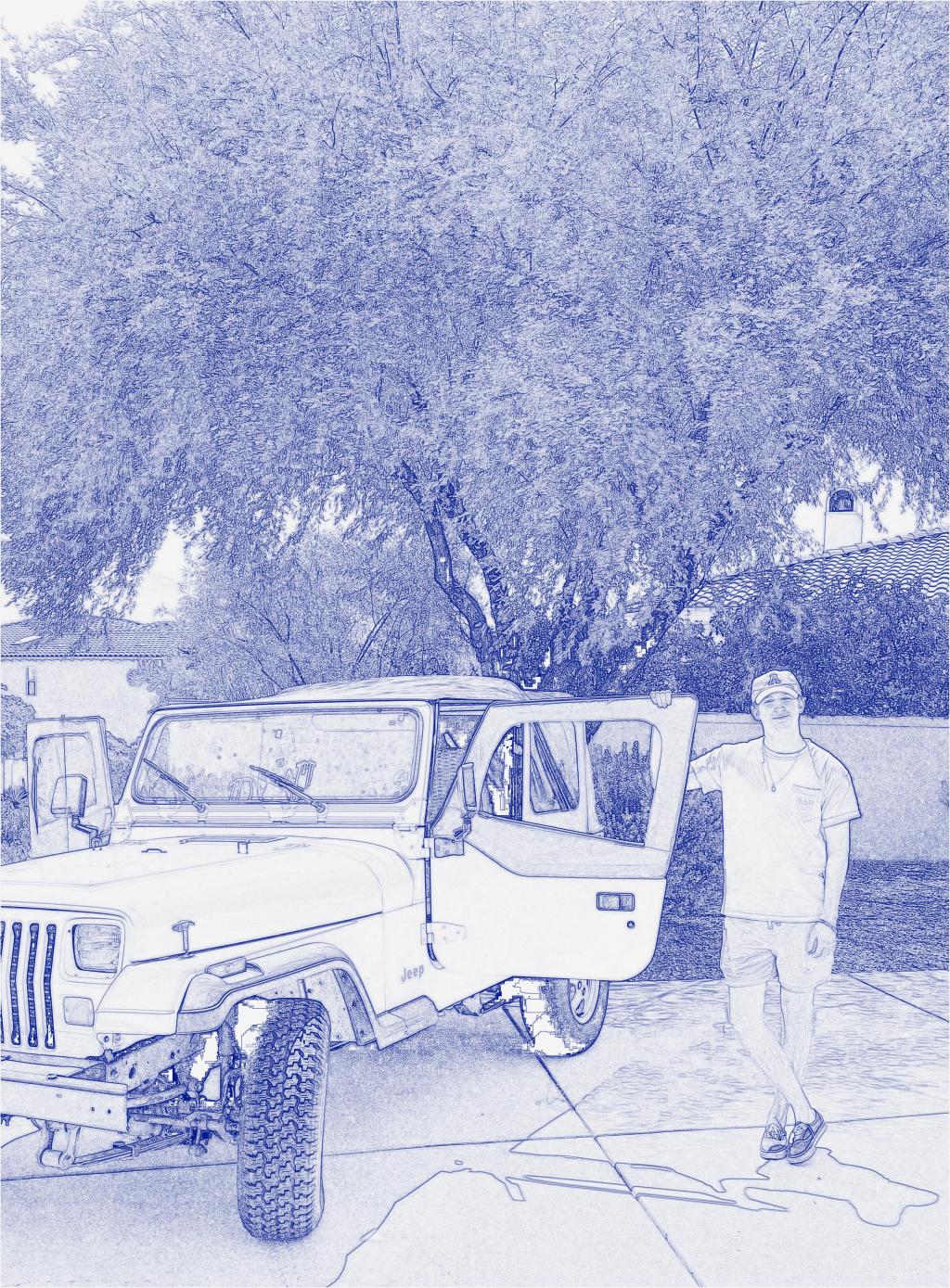
Cooper lived near my parents while attending college at the University of Arizona (2018-2022), and he spent a lot of time with Nanny and Poppy. On weekends, breaks, and even the summer, Cooper would go to his grandparents’ house and get spoiled. He would swim and golf and grill with Poppy. Swordfish on the grill was a common theme. Yeah, his death hurt them deeply.
We also had to call Cooper’s brothers and tell them. CJ lives with his fiancée, Em, out of state so we felt better about telling him, as he had someone to lean on. Carse lives alone, and we did not want to tell him until somebody was there with him. Our plan to tell Carse backfired, as we called him to ask if he was with his friend, as we suspected he might be, but he was not. Carse knew something was up and demanded we tell him. So we did. It went about as well as could be expected. He was leaving the gym. He punched the inside of his car with his car keys in his hand, which broke his key fob, and he had to walk home. I stayed on the phone with him for nearly three hours, mostly in silence. Carse was literally in shock.
My parents immediately drove to pick Carse up and drive him back home with them. The next day, they all left for our house by car. Two days later, they arrived. We all hugged and sobbed in the driveway the minute they pulled in.
CJ, our oldest, and Em immediately flew into town. They did not purchase return tickets home. One way.
We drove over that morning to tell my wife’s mom in person, the other Nanny. She was loving and compassionate with her daughter; it was amazing. Understand, my wife has not had the best relationship with her mom over the years, but in that moment, I witnessed a lot of healing and a very compassionate moment between mother and daughter.
The point of sharing the above is that my parents picking Carse up so he was not alone, and then as expeditiously as possible driving to our house, my brother immediately flying out to be with us in hell, and my oldest son and his fiancée immediately flying out—they all made it better.
We circled the wagons together as a family.
Then, our friends and coworkers all made it better with food, snacks, supplies, nice text messages, phone calls, cards, art, flowers, donations, and a great show of compassion and care toward us during a very, very hard time.
They made it better.
After all the family was gathered, there was the issue of a memorial service to contend with. We wanted to do something for family only, simple, and at our house. I reached out to Fr. Michael, my friend and priest with the local Orthodox Church, and asked if he would deliver a memorial service for Cooper. Of course, he said. He and his wife, Matushka, came over and performed the service. Instantly, our house went from high stress and emotion to one of calm. Their singing was beautiful, and they brought peace with them. Every person present would corroborate this. Fr. Michael and Matushka, they made it better.
Finally, even the funeral home, and especially the funeral home manager, made it better. We had never interacted with a funeral home before, and they helped us in a very careful and compassionate manner all along the way. We wanted to see Cooper, but there were some nuances to contend with. They made it work in a beautiful way, in the chapel, and I will always be grateful we got to say “goodbye.” I think this viewing was particularly meaningful to Cooper’s brothers. I know it was to me.
Yes, this all sucks. I was out walking today, on what I have come to call my Trail of Tears, listening to my “Thinking of you, Cooper” playlist, and I was overcome by how real and tragic his death is. It’s weird, this grief, how it comes in waves, and sometimes the waves flatten you with their weight. It’s like, “Damn, this is real, I am not dreaming.”
That said, our capacity to cope is building, and some sense of healing, for me, is taking place. I see the grace in that so many people and organizations made it better. I think these early “positive” experiences cast a good overall tone, helping us pivot in the right direction. I’m under no illusion—things could be different, the tone could have been set negatively from the get-go, and it would have done tremendous harm. Probably irreparable harm.
Cooper did not physically hurt anyone. We were able to view him, say goodbye, and we know where he is buried—next to his grandfather. We know we will be buried next to him one day in the future. Tragic as Cooper’s death is, and it really is, I know it could have been worse. I know others actually do have it worse.
All along the way, you, dear family and friends, and others, you made it better.
My hope is that as I move forward in life, I can make it better for others, and as I have discussed, especially for young men.
With gratitude to those who made it better.
Blessed are those who make it better.
Amen.


 Endure
Leave a comment