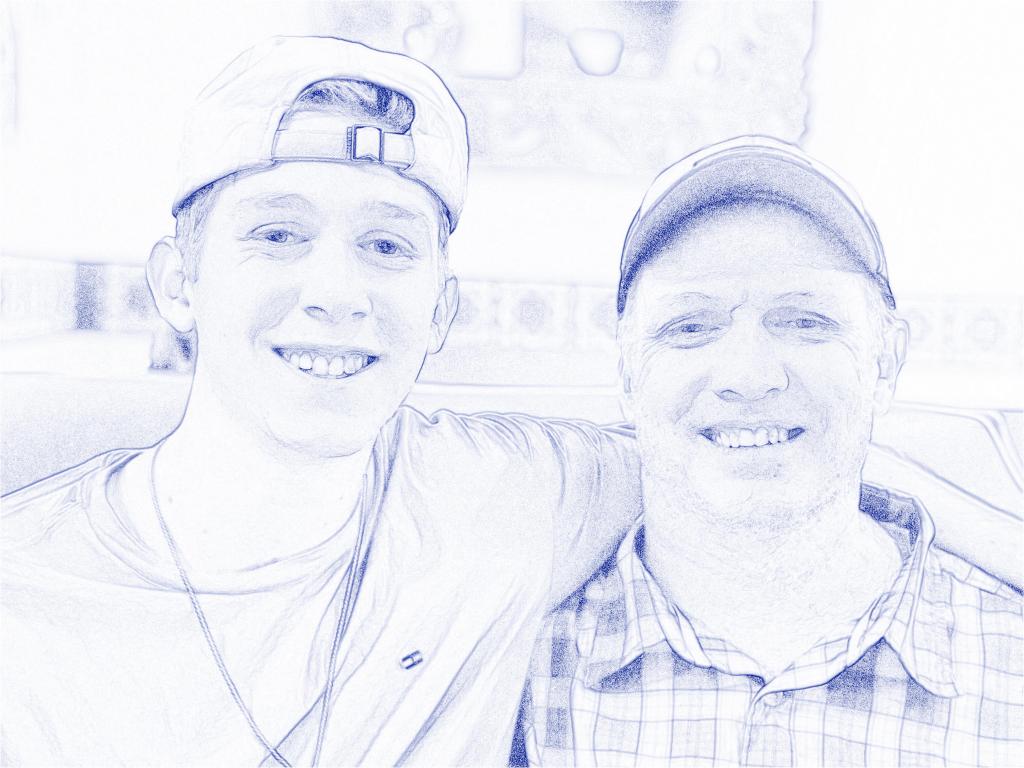
People grieve in different ways and at different paces. This is a recurring message in my various readings of grief literature. I understand this.
However, I still don’t know if I am doing it right. I feel okay, so maybe my array of practices is right for me. Time will tell. I will just keep putting one foot in front of the other.
One of my early approaches in navigating my traumatic grief was to do the best I could to figure out why Cooper took his life. I wanted answers. I wanted to make sense of his death where I was able to do so. To me, this felt like honoring Cooper. I feel like if I just shrug my shoulders and don’t ask questions, it’s dishonorable. I don’t want to live like that; it’s not who I am.
Full geek mode is part of my identity. I know, I know—it’s hard to get past my rugged good looks to see my hidden geek, but it’s there (more humor, hang in there with me).
A few weeks after Cooper died, when I could breathe and stand, thanks be to the grace of compassionate friends, I downloaded an application1 to my MacBook that allowed me to create timelines. I wanted to create a timeline. What I wanted to know in creating the timeline was whether there were red flags over the years that we missed, which, when seen collectively, would make more sense of this tragedy. The short answer is yes, to some degree, but every little bit helps when you are a grieving father.

A few days after Cooper’s death, one of my wife’s coworkers arrived at the door with snacks and food. I greeted her, and she said with tears in her eyes, “I can’t even imagine.” Her tears made me tear up. But what she expressed is true. Losing a child is the most unimaginable event that’s happened in my life. I don’t ask myself this question often, but I have asked it: “Why us? Why are we called to endure the unendurable?”
The only people who know are those who know. Trust me, you don’t want to know.
I created a timeline going back to Cooper’s sophomore year of high school, which is where we first had at least a yellow flag, if not a red one.
Following Cooper’s death, somehow, I was able to gain access to his iPhone without his passcode. It’s weird because, while I didn’t have his passcode, I did have his laptop. Miraculously, my oldest son was able to use the gaming computer Cooper built to find a few older passwords and then crack the password to Cooper’s MacBook.
With access to Cooper’s MacBook and iPhone, we were able to reset his iPhone. The iPhone did erase most everything on it when it reset, but it did retain text messages going back to January 2020. I was also able to get into Cooper’s email, which he had since 5th grade—and he never deleted anything! Yep, 7,000 promotional emails, all still there…
I wasn’t going through these efforts because I am nosy. In fact, I value privacy greatly. To wit, there are some things I came across that I have not shared with my wife. She doesn’t need to know, nor do others. I was going through this effort because I wanted to know why my son took his life.
You must understand, for us, this was completely unexpected. In one morning, a micro-atomic bomb was dropped on our house, and our hearts were shattered, I think maybe even literally. Scorched earth. Ripples of emotional and spiritual pain traveling in shock waves to family and friends.
I’ve read everything I could read, and where it was applicable to Cooper’s mental health, I added that information to the timeline. This exercise didn’t solve the mystery of the Unfolding, but it did fill in many missing gaps. As I have mentioned before, I now have a charcoal sketch, but not a complete picture.
For example, one of Cooper’s very good friends, a best friend, admirably, honorably, and responsibly called him out for certain behavior during his junior year of college, telling Cooper directly that his behavior was not okay and that, as his friend, he was concerned. This friend stood by Cooper’s side and helped him while courageously telling him things were not okay. This is an event that helps me, as a grieving father, sketch a fuller picture.
After I did the timeline exercise, I created two mind maps. The first mind map was writing “general considerations” for why Cooper might have taken his life. For this exercise, I just let my imagination flow and allowed that no ideas were off limits. I wanted to generate thoughts and many of them. I knew I could come back at a later time and apply more diligence to the mind mapping. This was a broad mind map, like a lighthouse shining light all around.

The second mind map I created was mapping “recent triggers.” This was a flashlight exercise. I was striving to think more specifically about recent triggers that may have led to Cooper’s death. For example, Cooper’s grandfather died in May 2023, and perhaps it was harder on him than he expressed. I think this is true, and I view this as a recent trigger that, among other triggers, cascaded into a mental health crisis.
Importantly, as I was thinking through these exercises, I was having a lot of dialogue with my wife about my thoughts. We were processing together. She helped review the timeline and the mind maps, and we talked through them together.
As an example, I had forgotten that Cooper had a fairly serious concussion while playing high school soccer during his senior year. We added this to the timeline. Maybe it was a factor at play, maybe not, but it’s an example of drawing out a fuller picture.
Another exercise I did was write a list of questions. I knew in writing most of the questions that I was not going to get an answer, but I still wanted to write the questions. I allowed myself to just ask questions, knowing there would be no answers forthcoming. But I did put the questions out there into the Universe.
Creating a timeline and thinking through two mind maps, general considerations and recent triggers, reading through Cooper’s emails, texts, and social media, and writing down a list of questions helped me to fill in some gaps that were missing. It’s provided me with a sense of conducting due diligence as a father to understand my son’s death. This was important to me.
This is how I was grieving in the early weeks—sense-making. Or maybe this was flat-out dissociation, I don’t know. I believe I was present in the work, but I did lose a sense of time.
After these exercises, I reached out to a few of Cooper’s friends to talk. Firstly, I know Cooper’s death has impacted many of his friends; it’s hard on them. They say one suicide affects, on average, 135 people. I believe it. It’s so easy for me in my grief to drop my head, go inward, and zone the world out. In fact, I find myself walking with my head down a lot these days, lost in my thoughts.
I believe that it’s okay that I go inward and spend time caring for myself and thinking, but I also believe it’s important to pick my head up and look around at the people around me. How are they doing? In calling a few of Cooper’s friends, I wanted to share in their grief with them. They are damn good kids.
I think grief is easier when we circle the wagons together. A thousand million threads bind us, and we need each other in grief. John Donne, my man JD, has it right: no man is an island, entire unto himself.2 As I often say, the smallest individual unit in the kingdom of God is two, not one.
But I had questions for Cooper’s friends too. Did they see anything that caused them concern? Now that they look back, is there anything that stands out to them, that makes more sense in retrospect? In talking with these friends, there was not much new added to help make sense of his death.
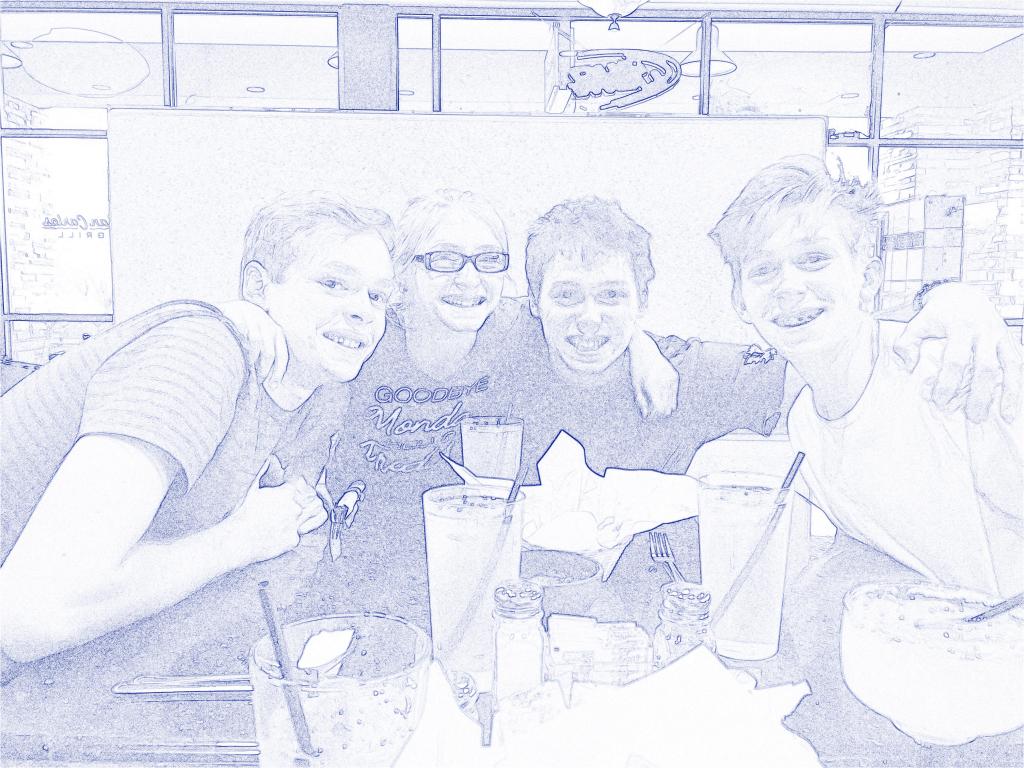
Finally, we are still waiting for the results from the autopsy and toxicology reports. Maybe more information is forthcoming, or maybe nothing. I don’t know. Unless my dad radar is completely broken, I simply don’t see anything profound coming up on these reports. Would it change anything? No. But might it help make more sense of things? Yes. Is this important? To me, yes.
Cooper didn’t leave us a note, and there is no evidence I can find that this was preplanned. So what happened?
Can you see my theme here? The unanswered questions haunt me, and part of my grieving process is to answer what I am able to reasonably answer.
I am using this blog post to set up a few future blog posts. Below are topics I intend to draw out and discuss at length. I want to wax on how these topics influence suicide in society.
• Technology/screen time and brain development—in particular, the prefrontal cortex and its potential underdevelopment in digital natives.
• Loneliness, isolation, and shame—this is a dangerous three-headed dragon.
• Social media, dopamine hits, fried nervous systems at a young age, measuring up, and the perceived existential threat of not belonging to the tribe.
• Global events presenting as local and amplified by social media and emotional contagion—e.g., Ukraine-Russia, Israel-Gaza, and the unique stress this causes on the human psyche.
• The war on boys, young men, and “toxic masculinity” narratives; death by a thousand lashes.
• Drugs, alcohol, and college culture—particularly psychedelics, and the academy’s break from objective reality.
• Elected officials acting like petulant children instead of behaving as authentic leaders.
• Being introverted in an extroverted society; lack of silence in a noisy world.
• No rites of passage for our young and the impact this might have.
• Mental health—depression, anxiety; these are global pandemics.
• Rogue/extractive capitalism (as opposed to generative economies), the military-industrial-complex, consumerism/consumption, and the disconnect between evolutionary-biological human development and the demands of the modern workplace.
• The impact COVID-19 had/has on mental health—especially the specific messaging of “social distancing and isolation” for those already socially challenged and prone to isolation.
• Suicide statistics—In the United States, ~50,000 in 2022, one every 11 minutes, ~80% men, ~76% white, and the second leading cause of death for those aged 10-24.
Let me end with this today. Sadly, I believe Cooper’s suicide is just the tip of the iceberg. There have already been too many suicides, and my fear is there are going to be many, many more—for a variety of reasons. As I was speaking to the memorial stone representative a few days ago, he shared that they have already seen a marked increase in suicides. This is called “ground truth.”
I want to carefully and compassionately start unpacking why suicide among white men and Native American men is so high and what we can do about it.
The first thing I would say is we need to stop disparaging men for being men. Period. The war on boys must stop.
If you have young men in your life—heck, any man—look them in the eyes today and tell them you love them and appreciate them and that you are glad they exist.
Ladies, you are loved. My advocacy for men is not a negation of women. I am just sensing very deeply that part of my mission moving forward is going to be advocating for young men and building them up. Young men are hurting very badly, and they need our help.
Here I am, Lord. Send me.


 Endure
Leave a comment