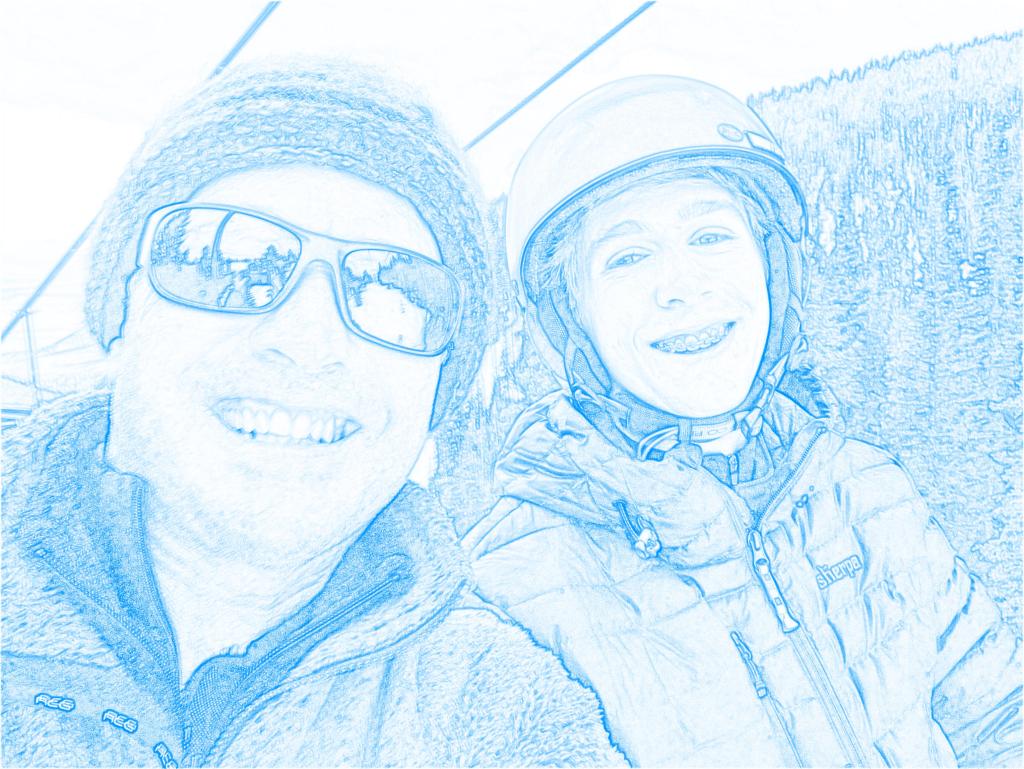
I can’t help but to question my parenting following Cooper’s death.
What parent wouldn’t have questions, guilt, and a host of “what if we had done this, what if we had done that, what if we had zigged there instead of zagging?”
I understand that could have, would have, should have is normal in grief.
I am a student of resilience science. I have also been a teacher of resilience at the university. In my past studies, there’s a particular phrase I have come across that is ringing quite loudly in my mind: “good enough” parenting or caregiving (Dr. Michael Ungar).1
Resilience is rarely about an individual person and their personal grit. Grit matters little. Thirty years of international, cross-cultural research demonstrates convincingly that resilience is about the resources and support we have access to in our times of adversity and trauma—times like this.
For example, I am not “doing okay” right now because I have gritty personal qualities. I am doing okay, marginally, because I live in a comfortable house, in a safe community, and we have been supported by family, friends, coworkers, and a faith-wisdom leader. We are doing okay because we have access to counselors and have had time off work to process and begin to heal. We have health insurance. We have a car to drive to appointments. We have money to pay co-pays. We have coffee and craft beer. We have snacks and lots of chocolate.
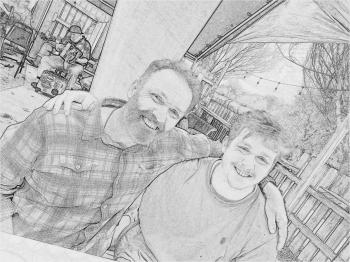
For resilient outcomes, one “resource” we all need, which makes it easier to deal with tough times in life, is “good enough” parenting. To be clear, people do have resilient outcomes even if they didn’t (or don’t) have good enough parenting, but this likely means they have other resources that compensate.
As I think about Cooper and his upbringing, nurture and nature, how we raised him, and where we raised him, I can say, almost unequivocally, that our parenting of Cooper was “good enough.” You notice my lack of complete confidence. I notice it too. Writing “almost unequivocally” makes me chuckle to myself, and I suppose in this moment, I am glad to be laughing.
Here’s what I am expressing: I have guilt that my child took his own life. As I puzzle over why he did it, I can’t help but question my parenting. Where was I at play in his death? Where am I responsible and culpable? The old Episcopalian prayer comes to mind: “What have I done, and what have I left undone?”
As I think about resilience, resources, and Cooper, I do know with reasonable certainty that our parenting was “good enough.” I have a high level of confidence in this. Great parenting? Probably not. As all parents know, they don’t hand you a child-raising manual when you leave the hospital. You simply do the best you can at the time. Sadly, we tend to bring our own childhood dysfunction to the family dynamic, which makes great parenting difficult. And oh, by the way, who is the judge of great parenting? I like models. Show me a model of great parenting.
Now that I am thinking more clearly and have more space in my brain, I am beginning to read books on grief and healing following child loss. I didn’t get my first book purchase right for our particular situation, because it doesn’t deal with child loss per se, but I did enjoy reading The Deepest Place: Suffering and the Formation of Hope2 by Curt Thompson, MD.
I am very quickly learning, in the thick of the grief of child loss, that “resilience,” as I know it and teach it, is not enough. I am experiencing that there is another domain beyond resilience—meta-resilience—and it is hope. I now believe the formation of rugged hope is more important than resilience. Rugged hope, I think, is only born in the crucible of tremendous suffering.
When the micro-atomic bomb dropped on our house Sunday, October 8th, in the weeks following, it felt to me like the most important thing was to somehow sense, know, see, and feel there will be a better future. Otherwise, this is a f**king joke.
There will be better days, I know. My two boys, my daughter, and their bright futures are some things I am looking forward to. I am hopeful in figuring out our new future together with my wife following this devastation. We are not making any major changes for at least a year, but maybe we will go travel the world, who knows. I really want to visit Finland. Maybe we launch. Not saying we are going to do this; I am painting future possibilities to give us a glimpse of hope.
In his book, Dr. Thompson brings up secure attachment theory as necessary for forming hope, and he describes secure attachment through the 4 S’s: being Seen, Soothed, Safe, and Secure.
I think back to Cooper, especially his formative years, the last four years, the last year, even the last weeks of his life, and I ask myself: Was Cooper seen, soothed, safe, and secure in his relationship with his mother, father, brothers, sister, close family, and friends? Again, I believe with a high level of confidence, the answer is yes. Cooper was definitively seen, he was soothed, he was safe, and he was secure with his family and close friends.
Sadly, I don’t know if Cooper was seen, soothed, safe, and secure with others outside of the home. I would like to hope so.
Just know, every person we come into contact with on a given day could be in a very isolated and lonely place, very hurt, and our smile, our seeing them, may prevent further micro-atomic bombs being dropped on families.
On the Sunday morning Cooper took his life, my brother was in Florida on vacation with friends. When he learned about Cooper, he flew into town to be with us. He arrived late Sunday night. I honestly don’t know what I would have done without my brother here in those early days. He slept on the floor next to me all night for four nights, and we woke up throughout the night crying, talking, and sometimes standing up and hugging it out. My brother told his friends, “I need to leave and go walk through hell with my brother.” And he did. He stood in the center of the fire with me and did not shirk back. He left my house in tatters—it really was true hell.
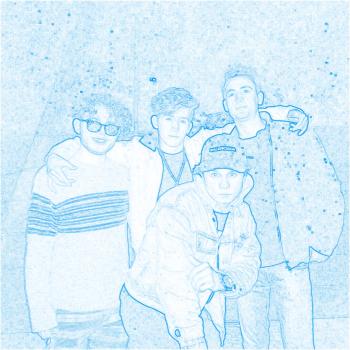
One of the mornings, as we had coffee, my brother said, “Here are two things you need to know: 1) you loved your son and he loved you, and 2) you did the absolute best you could.” He was not asking me a question. He was making a statement; he was commanding me to hear him. As you can read, I did.
I have libertarian ethos tendencies. I do.
My great-grandfather was a miner and worked the copper mines in Butte, Montana. My grandfather was born in Butte. Growing up, my dad always said, “Live and let live.”
It was not until we lived in Montana for a few years that I was able to pick up on the underlying philosophy my dad was always preaching. Not unsurprisingly, I too share this philosophy. Live and let live.
Cooper was his own man, a created being in the image of God, imago dei, with his own eternal soul. He was the Captain of his ship, the master of his fate. As his father, I frequently counseled him, but I never forced him to do anything.
I counseled Cooper to “go pro” several times, to get professional counseling, and to see a doctor about getting baseline labs drawn. I gave Cooper a list of possible counselors and doctors to choose from, the ones covered by insurance, highly recommended he go see them, and then stood back. This goes back to the college days when he was having a tough go of it.
For some reason, it seems important for a lot of people around me to tell me that Cooper’s death is not my fault and that I shouldn’t feel guilty. I’m not a counselor nor trained in this profession, so they must have some reason for saying this to me.
What I have done here is share why I should not have guilt over Cooper taking his life. But again, if you have been reading my blog, I know my own tomfoolery, the tricks I am telling myself.
Friends, it’s okay; I accept, in the main, my own arguments here.
• Cooper surely had good enough parenting. I sincerely believe this.
• Cooper was seen, soothed, safe, and secure with his parents, siblings, and close family and friends.
• I loved my son, he loved me, and I did the absolute best I could in parenting him. My wife, the same. Brothers, the same. Sister, the same. Close family and friends, the same.
• I always treated Cooper as a unique, creative, intelligent, caring individual created in the image of God and capable of making his own choices. I nurtured his self-agency. I trusted his free will and did not impose myself upon him in a strict manner. I acted as mentor and confidant, especially as he grew older.
I believe all of the above, and it is true. But please, can you fault me (us) for having some level of guilt and remorse over this? This seems natural to me, to have these questions and guilt.
No matter. In my suffering, I do have hope for a brighter future. “The best days of my life are ahead of me.”
I pray the same for you. I am glad you exist, and I am excited for your future.
- Ungar, Michael. Working with Children and Youth with Complex Needs: 2nd Edition. Oxford University Press, 2020. Resilience Research Centre, Dalhousie University. 52 Rugged and Resourced Protective Factors. www.resilienceresearch.org. ↩︎
- Thompson, Curt. The Deepest Place: Suffering and the Formation of Hope. Zondervan, 2023. ↩︎
 Endure
Leave a comment